
MUMBAI / NEW DELHI, SEPTEMBER 22, 2026 — During trading on Tuesday, September 22, 2026, Dalal Street sentiment received a decisive lift as benchmark indices advanced, with the Nifty 50 holding firmly above the 23,450 threshold and the Sensex gaining over 100 points, propelled by softening crude oil prices globally and robust institutional participation across key sectoral gauges.
According to market intelligence reports compiled from Moneycontrol and Livemint, the recent easing of international energy benchmarks has significantly reduced imported inflation pressures for Indian manufacturing and consumer goods companies. Analysts tracking intraday trade setups noted that sustained buying momentum helped key index heavyweights defend crucial support zones established during the previous week’s consolidation phase.
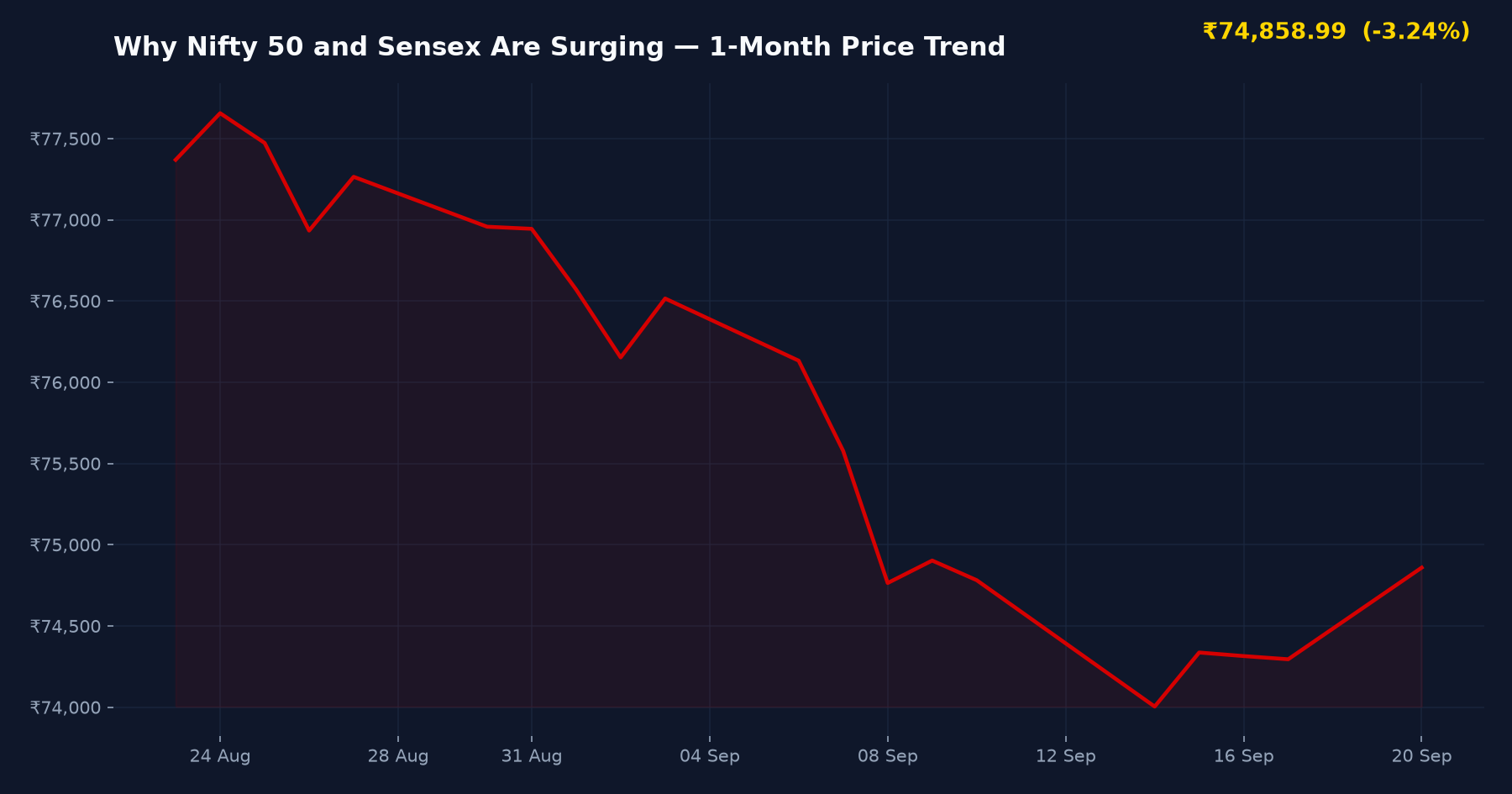
SENSEX
INDEX
▲ +₹234.08 (+0.32%)
Day Range: ₹74,423.71 – ₹75,038.93
52W Range: ₹71,545.81 – ₹86,159.02
● Real-Time Feed
Key Market Milestones & Calendar Timeline
The table below outlines the chronological market milestones and trading plan sessions leading up to the September 22, 2026 trading session across major domestic indices.
| Event / Catalyst Milestone | Exact Calendar Date |
|---|---|
| Weekly Consolidation & Friday Low Defense | September 18, 2026 |
| Trade Setup & Opening Bell Analysis Print | September 21, 2026 |
| Nifty 50 Intraday Recovery Above 23,450 | September 22, 2026 |
| Technical View & Resistance Review Print | September 23, 2026 |
Macroeconomic Catalysts & Index Performance Metrics
Market breadth remained positive during Tuesday’s session, supported by easing crude quotes that alleviate fiscal deficit concerns for the Indian economy. Brokerage research from ICICIdirect and Motilal Oswal indicates that lower oil import bills directly benefit corporate operating margins, particularly in sectors such as paints, aviation, logistics, and downstream oil marketing.
| Index Parameter / Metric | Current Level / Reading |
|---|---|
| Nifty 50 Spot Index | Above 23,450 |
| Sensex Intraday Gain | +100+ Points |
| Immediate Trend Reversal Resistance | 23,600 |
| Key Support Zone Defended | Friday’s Lows |
Technical Outlook & Sectoral Trends
Technical strategists note that while the Nifty 50 has successfully defended immediate downside floors, a decisive breakout above the 23,600 resistance level is required to confirm a robust medium-term trend reversal. Chartists reviewing daily candlestick patterns highlight that consolidation phases often precede sharp directional moves.
Bullish Growth Catalysts
- Softening Oil Prices: Lower international crude quotes reduce domestic inflation and support macroeconomic stability.
- Strong Support Defense: Successful defense of Friday’s swing lows indicates institutional buying interest at lower levels.
- Margin Expansion Potential: Lower raw material costs provide earnings tailwinds for consumption and manufacturing enterprises.
Bearish Downside Risks
- Overhead Resistance: Failure to clear the 23,600 hurdle could trap bulls in a protracted range-bound consolidation.
- Global Volatility: Unpredictable shifts in foreign institutional investor (FII) flows may trigger sudden intraday reversals.
Investment Analytical Verdict
Suitable For: Active Swing Traders and Long-Term Equity Investors
Risk Level: Medium — Range-bound consolidation requires strict adherence to stop-losses near key support zones.
Key Watch Point: Sustained daily closing volume above the 23,600 resistance handle.
Frequently Asked Questions
What is driving the market recovery and Nifty 50 surge above 23,450?
The market recovery is primarily being driven by declining international crude oil prices, which ease macroeconomic pressures, lower input costs for Indian businesses, and encourage fresh institutional capital deployment.
What are the critical technical levels to watch for Nifty 50?
According to technical analysis from Moneycontrol and Livemint, Nifty 50 must achieve a decisive move above 23,600 to confirm a confirmed trend reversal, while immediate support rests around the previous session lows.
How do falling oil prices impact Indian stock market sectors?
Falling oil prices reduce India’s import bill and fiscal deficit, while directly benefiting consumer goods, paints, aviation, and manufacturing sectors through expanded profit margins.
SEBI Compliance & Statutory Disclaimer
The information and analysis presented on IPO Bulletin (ipobulletin.com) are for informational and educational purposes only and do not constitute financial, investment, or legal advice. Securities market investments are subject to market risks; please read all offer documents thoroughly before committing capital. Always consult a SEBI-registered investment advisor before making financial decisions.
Sources cross-checked for this article: Moneycontrol, Livemint, Economic Times, BSE India filings