
MUMBAI / NEW DELHI, NOVEMBER 10, 2026 — During morning trade on Tuesday, November 10, 2026, dividend yields from state-run energy, refining, and mining heavyweights including Coal India, Indian Oil Corporation (IOCL), Bharat Petroleum Corporation (BPCL), and natural resources major Vedanta gained sharp focus across Dalal Street. As benchmark gauges trade near record territory on the Indian market indices dashboard, corporate filings on BSE and NSE highlight how disciplined capital returns and dividend distributions establish vital valuation floors for income-focused portfolios.
Key Takeaways at a Glance
- Yield Defense in Bull Regimes: High-dividend Public Sector Undertakings (PSUs) and commodity producers offer cash yields between 5% and 10%, buffering broader equity market swings.
- Sustained Operating Cash Flows: Robust domestic power consumption and stable gross refining margins (GRMs) continue supporting quarterly free cash generation.
- Capital Allocation Discipline: Government dividend mandates ensure regular state-treasury transfers without halting essential energy transition capital expenditure.
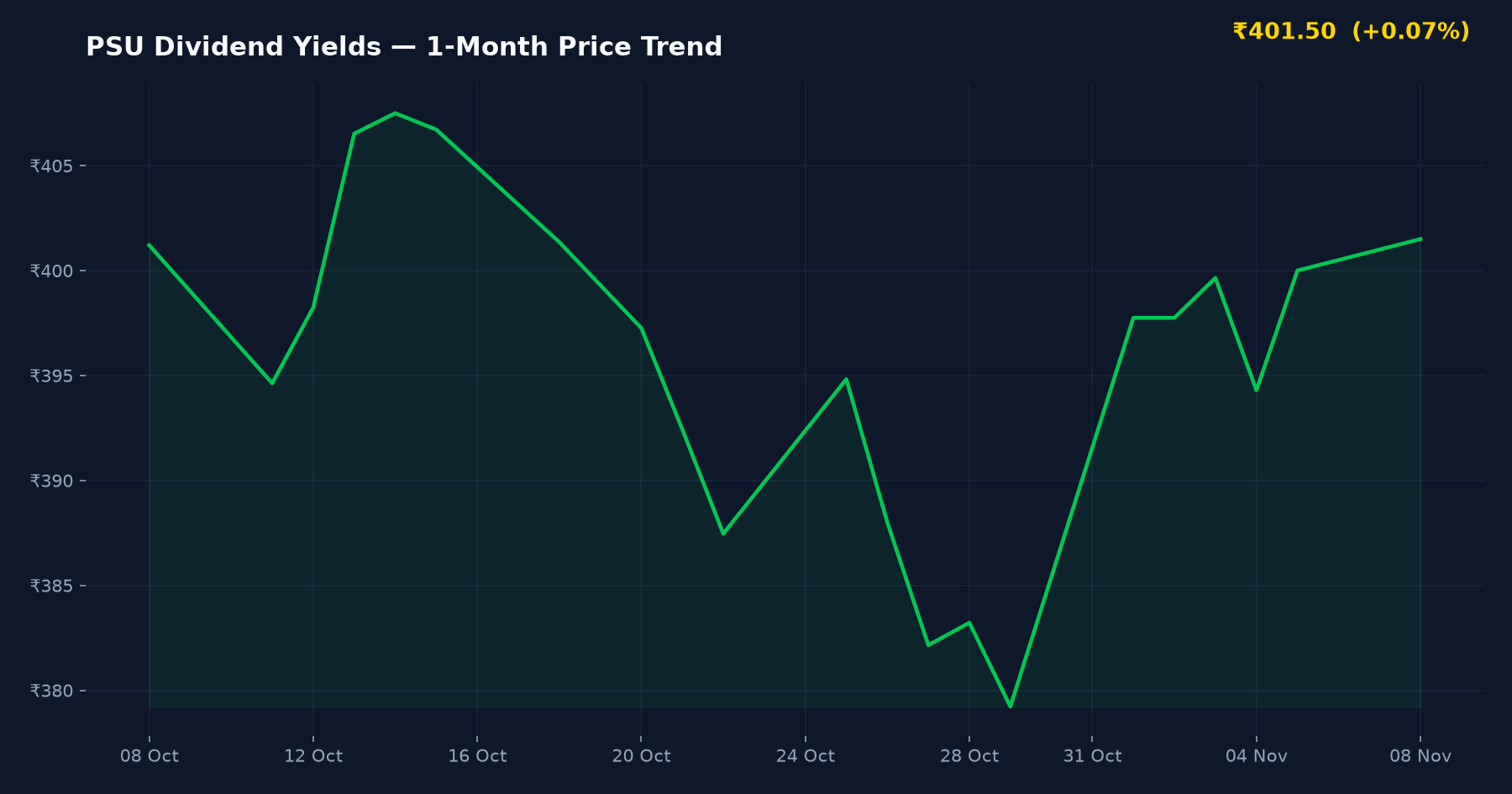
▲ +₹0.50 (+0.12%)
Day Range: ₹398.55 – ₹403.50
52W Range: ₹369.60 – ₹491.25
● Real-Time Feed
Corporate Action Schedule & Recent Earnings Milestones
A review of regulatory filings submitted to BSE and NSE India outlines the calendar sequence of recent earnings declarations and corporate announcements across core energy and industrial producers:
| Event / triggers Milestone | Exact Calendar Date |
|---|---|
| Coal India Market Trading & Price Action Review | November 09, 2026 |
| Maxwell Engineering Solutions Financial Filing | November 09, 2026 |
| Institutional Dividend Allocation Review Print | November 10, 2026 |
Dividend Yield Economics: PSU Heavyweights vs. Private Metal Majors
Market commentary published across Livemint and financial reporting desks underscores how dividend distribution policies have evolved from passive returns into active portfolio-stabilizing metrics. In an environment where the live IPO calendar and primary market schedule absorbs massive institutional and retail liquidity, cash-distributing blue-chip entities offer distinct balance-sheet defensive characteristics.
Dividend yield—calculated as annual dividend per share divided by the current market price—acts as a cash-flow barometer. For central public sector enterprises (CPSEs) like Coal India, Indian Oil Corporation Limited (IOCL), and Bharat Petroleum Corporation Limited (BPCL), dividend payout ratios are anchored by Department of Investment and Public Asset Management (DIPAM) guidelines. These rules mandate state enterprises to deliver an annual dividend of at least 30% of net profit or 5% of net worth, whichever is higher.
Operating Cash Flows, Energy Realizations, and Free Cash Reserves
1. Coal India: Volume Growth and Power Demand
Coal India Limited maintains a near-monopoly footprint supplying domestic dry-fuel linkages to thermal generation plants. According to fundamental data from Screener.in and corporate exchange filings on BSE, the company continues funding working capital and internal rail evacuation corridors out of organic operating cash flows, allowing sustained quarterly interim dividend distributions directly to shareholders and the Government of India.
2. Fuel Marketers (IOCL & BPCL): Refining Economics and Marketing Margins
Downstream oil marketing companies such as IOCL and BPCL navigate cyclical swings in global crude prices and gross refining margins (GRMs)—the difference between the value of refined petroleum products and the cost of crude oil. Balance-sheet stability for refiners depends on predictable retail auto-fuel pricing, domestic LPG support, and measured project debt servicing.
3. Vedanta Limited: Commodity Upcycles and Holding Company Upstreaming
Private diversified natural resources producer Vedanta Limited reflects a contrasting corporate dynamic. Institutional analysis shows that Vedanta’s aggressive dividend payouts correlate closely with the debt-reduction and deleveraging requirements of its London-based parent company, Vedanta Resources Limited (VRL). Operating cash contributions from zinc producer Hindustan Zinc and aluminium smelting lines fund these large transfers.
While secondary market investors track dividend yields alongside the recent IPO listing performance tracker, seasoned participants examine whether a high yield reflects true operational strength or simply a depressed stock price.
Analytical Investor Framework: triggers vs. Downside Risks
Evaluating dividend-heavy commodity and energy companies requires weighing steady operational cash flows against inherent sector volatilities:
Positive Capital Growth & Payout triggers
- Predictable Institutional Re-investment: High cash dividends enable institutional and mutual fund managers to reinvest liquid payouts into defensive allocations during volatile broad-market cycles.
- Sovereign Balance Sheet Mandate: CPSE fiscal guidelines from DIPAM create structural pressure on boards to maintain steady dividend payout schedules.
- Strong Domestic Consumption Baselines: India’s expanding industrial electricity consumption directly underpins off-take commitments for state energy miners.
Core Operational & Financial Risk Factors
- Global Commodity Cyclicality: Downturns in international benchmark prices for crude oil, base metals, or thermal coal directly compress operational profit margins.
- Capital Expenditure Diversion: Expanding green transition mandates (such as renewable power grids, hydrogen, and carbon reduction facilities) require significant capital commitments that may trim future payout ratios.
- The Dividend Trap Vulnerability: A high optical dividend yield can occasionally signal structural price erosion rather than sustainable underlying cash generation.
What to check before evaluating high-dividend stocks
- Free Cash Flow Coverage: Verify whether dividends are paid out of genuine operational free cash flows or funded through external borrowing.
- Debt-to-Equity Ratio: Review balance-sheet leverage, debt maturities, and interest coverage ratios on platforms like Screener.in before tracking payout yields.
- Regulatory & Green Transition Capital Outlays: Check annual reports for projected capital expenditures into renewable energy, decarbonization, and refinery expansion.
- Net Asset Value & Price-to-Earnings Multiples: Compare trailing valuation ratios against cyclical multi-year sector averages.
Frequently Asked Questions
How do PSU dividend yields influence Indian stock market valuations?
High dividend yields in public sector undertakings create a downside valuation floor for core benchmark indices during volatile trading phases. Because companies like Coal India and IOCL maintain steady operating cash flows, regular dividend distributions attract conservative domestic institutions and income-focused retail investors looking to reinvest proceeds.
What is the distinction between optical dividend yield and sustainable cash yield?
An optical dividend yield can appear artificially elevated if a stock’s market price drops sharply due to business deterioration. In contrast, a sustainable dividend yield is supported by steady operating cash flows, conservative leverage ratios, and consistent annual earnings generation.
What regulatory policies govern dividend payouts for central public sector enterprises?
Under Department of Investment and Public Asset Management (DIPAM) mandates, central public sector enterprises are generally required to pay an annual dividend of at least 30% of profit after tax (PAT) or 5% of net worth, whichever metric is higher, subject to capital expenditure commitments and liquidity constraints.
SEBI Compliance & Statutory Disclaimer
The information and analysis presented on IPO Bulletin (ipobulletin.com) are for informational and educational purposes only and do not constitute financial, investment, or legal advice. Securities market investments are subject to market risks; please read all offer documents and corporate filings thoroughly before committing capital. Grey Market Premium (GMP) figures are unofficial, unregulated street estimates. Always consult a SEBI-registered investment advisor before making financial decisions.
Sources referenced: Livemint, BSE India filings, NSE India, Screener.in, DIPAM Guidelines
Reusing this article or its images? Credit IPO Bulletin and link to https://ipobulletin.com/news/psu-dividend-yields-coal-india/. Content licence.