
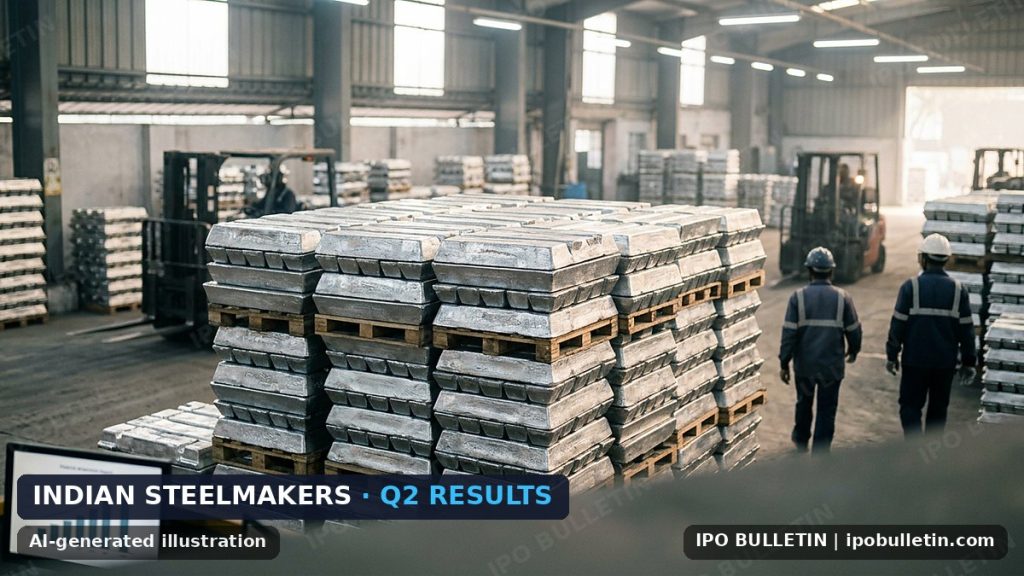
MUMBAI / NEW DELHI, OCTOBER 20, 2026 — As of Monday, October 19, 2026, the Indian steel sector is poised for a stronger Q2 FY27 earnings performance compared to its non-ferrous counterparts, primarily driven by robust domestic demand and higher sales volumes. Conversely, non-ferrous companies, particularly those in aluminium, anticipate a sequential decline in profitability, with revenues projected to fall by 2% and EBITDA by 13% due to softening London Metal Exchange (LME) aluminium prices.
Key Takeaways at a Glance
- Issue & Valuation Snapshot: Indian steelmakers anticipate stronger Q2 FY27 earnings due to higher volumes.
- Timeline & Lot Economics: Non-ferrous sector faces sequential decline: 2% revenue, 13% EBITDA in Q2 FY27.
- Filing & Market Context: Falling LME aluminium prices are a primary drag on non-ferrous profitability.
Indian Steel Sector: Q2 FY27 Performance Drivers
The Indian steel industry is expected to demonstrate resilience in its Q2 FY27 earnings, primarily buoyed by sustained domestic demand and a notable increase in sales volumes. This positive outlook is largely attributed to ongoing government infrastructure projects and a steady recovery in the construction and automotive sectors. Despite potential fluctuations in global steel prices, the robust local consumption is providing a stable foundation for steelmakers, enabling them to maintain healthy capacity utilization rates and improve operational efficiencies. Analysts tracking the sector suggest that this volume-driven growth will be the primary triggers for stronger financial results, positioning steel companies favorably against their metal peers.
Non-Ferrous Metals: Headwinds from LME Aluminium Prices
In stark contrast, the non-ferrous metals sector, particularly aluminium producers, is bracing for a challenging Q2 FY27. Projections indicate a sequential revenue decline of 2% and a more significant 13% drop in Earnings Before Interest, Taxes, Depreciation, and Amortization (EBITDA). The primary factor behind this anticipated downturn is the softening trend in London Metal Exchange (LME) aluminium prices. As a global benchmark, LME prices directly influence the realization rates for Indian aluminium producers, impacting their profitability margins. This price pressure, coupled with potential input cost volatility, is expected to weigh heavily on the financial performance of major non-ferrous players. Investors closely monitor the Indian market indices dashboard for broader sector trends and commodity price movements.
Market Dynamics and Global Commodity Trends
The divergence in performance between steel and non-ferrous metals highlights the intricate interplay of global commodity cycles and domestic market dynamics. While steel benefits from India’s internal growth story, non-ferrous metals, especially aluminium, remain highly susceptible to international price movements and global economic sentiment. According to market intelligence from various financial news outlets, the global economic slowdown and an oversupply in certain international markets have contributed to the downward pressure on LME aluminium prices. This scenario underscores the importance of a diversified portfolio for investors looking at the metals sector, as evidenced by the varying fortunes of different metal segments.
Brokerage Insights and Investor Sentiment
Brokerage research compiled by firms like Motilal Oswal and ICICIdirect has increasingly pointed towards the relative strength of the steel sector in the current quarter. Discussions across investor forums, including Reddit r/IndianStockMarket and ValuePickr, also reflect a cautious sentiment towards non-ferrous stocks due to commodity price volatility. Investors are advised to refer to official filings on BSE India and NSE India for detailed financial disclosures as they become available. The upcoming earnings season will provide further clarity on how these macro and micro factors have translated into actual financial results for individual companies, impacting their positions on the recent IPO listing performance tracker for newly listed metal companies.
Bull vs. Bear Case for Indian Metals Sector
Understanding the triggers and risks is crucial for investors navigating the metals sector.
Bull Case (Steel Sector triggers)
- Robust Domestic Demand: Continued government spending on infrastructure and a recovering real estate sector drive steel consumption.
- Higher Sales Volumes: Increased production and dispatch volumes are expected to offset any minor price corrections.
- Operational Efficiencies: Indian steelmakers have invested in technology to improve cost structures and productivity.
Bear Case (Non-Ferrous Sector Risks)
- LME Price Volatility: Fluctuations in global commodity prices, particularly LME aluminium, directly impact revenue and profitability.
- Global Economic Slowdown: Weakening global demand can lead to oversupply and further price erosion for non-ferrous metals.
- Input Cost Pressures: Rising energy and raw material costs can squeeze margins, especially for energy-intensive aluminium production.
Frequently Asked Questions
What factors are driving the projected outperformance of Indian steelmakers in Q2 FY27?
The primary drivers for Indian steelmakers’ anticipated outperformance in Q2 FY27 are strong domestic demand, fueled by government infrastructure projects and a recovering construction sector, alongside higher sales volumes. These factors are expected to support earnings despite global price volatility.
How are falling LME aluminium prices impacting non-ferrous companies’ Q2 FY27 earnings?
Falling London Metal Exchange (LME) aluminium prices are significantly impacting non-ferrous companies by reducing their realization rates, leading to a projected 2% sequential revenue decline and a 13% drop in EBITDA for Q2 FY27. This directly erodes profitability margins for producers.
What are the key risks and opportunities for the Indian metals sector in the current quarter?
Opportunities in the current quarter lie primarily with the steel sector due to robust domestic demand and volume growth. Key risks for the overall metals sector, particularly non-ferrous, include global commodity price volatility, potential global economic slowdowns affecting demand, and persistent input cost pressures.
SEBI Compliance & Statutory Disclaimer
The information and analysis presented on IPO Bulletin (ipobulletin.com) are for informational and educational purposes only and do not constitute financial, investment, or legal advice. Securities market investments are subject to market risks; please read all offer documents (DRHP/RHP) thoroughly before committing capital. Grey Market Premium (GMP) figures are unofficial, unregulated street estimates. Always consult a SEBI-registered investment advisor before making financial decisions.
Sources referenced: The Economic Times, Moneycontrol, Livemint, BSE India filings, NSE India filings, Screener.in, Trendlyne.
Reusing this article or its images? Credit IPO Bulletin and link to https://ipobulletin.com/news/indian-steelmakers-q2-earnings-outlook/. Content licence.