
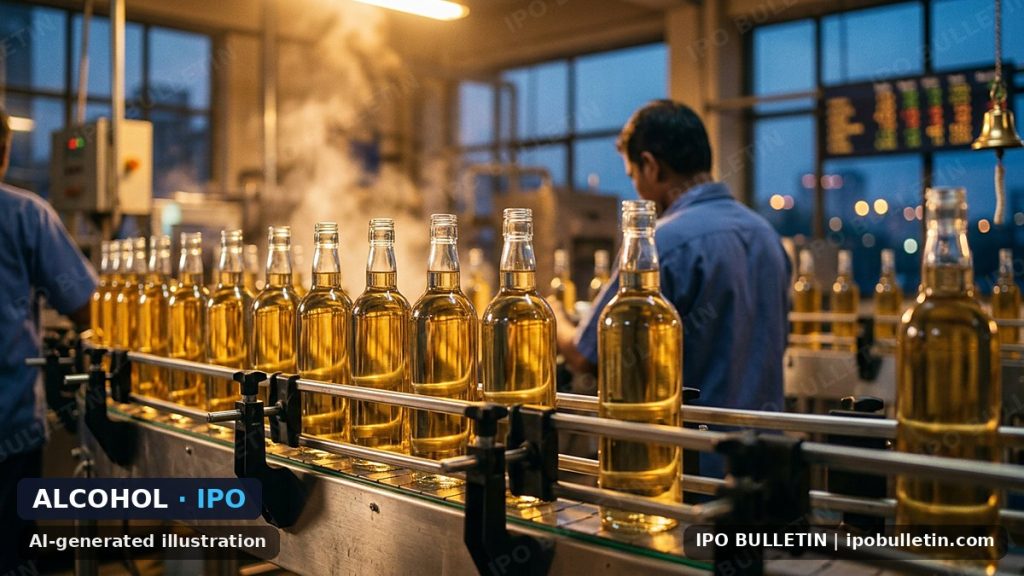
MUMBAI / NEW DELHI, NOVEMBER 05, 2026 — Global spirits and beverage equities witnessed an influx of buying interest during trading on Wednesday, November 04, 2026, as political shifts fueled expectations of revised immigration policies and easing trade tensions across North America. Equities including Constellation Brands and Brown-Forman moved higher, even as market participants weighed lingering export tariffs and structural headwinds against broader sector valuations.
Key Takeaways at a Glance
- Policy triggers: Shifting political dynamics following the November 2026 elections triggered gains across international beverage producers on hopes of normalized border and trade arrangements.
- Tariff Headwinds: Lingering retaliatory duties continue to suppress United States spirits export volumes, contrasting with domestic premiumization tailwinds.
- Indian Sector Corroboration: Domestic liquor majors remain closely tracked on the Indian market indices dashboard as regulatory compliance, bilateral trade pacts, and premium product lines shape earnings.
Timeline of Sector triggers & Corporate Developments
The beverage ecosystem has tracked a series of cross-border trade negotiations, corporate expansions, and regulatory directives throughout the 2026 calendar year:
| Event / triggers Milestone | Exact Calendar Date |
|---|---|
| India-UK FTA talks lift domestic liquor equities up to 4% | June 18, 2026 |
| FSSAI enforces regulatory directives on flavoured alcoholic beverages | August 06, 2026 |
| Varun Beverages approves entry into alcohol segment via dedicated arm | August 25, 2026 |
| United Breweries initiates portfolio repositioning framework | September 07, 2026 |
| Global alcohol equities rally on midterm election policy expectations | November 04, 2026 |
Policy Tailwinds vs. Export Tariff Pressures: Financial Overview
The market reaction on November 04, 2026, highlighted how sensitive consumer staple equities remain to international trade policy and cross-border labor dynamics. In the United States, shares of Constellation Brands advanced as market participants priced in more favorable immigration frameworks, which directly affect agricultural supply chains and distributor channels. Simultaneously, Brown-Forman experienced positive buying sentiment on expectations of de-escalating commercial friction with key trade partners such as Canada.
However, fundamental data compiled by international trade bodies reveals underlying friction. Looming and existing retaliatory tariffs have caused a measurable contraction in United States distilled spirits exports over consecutive quarters. Furthermore, domestic per-capita alcohol consumption volumes in North America continue to hover near multi-decade lows, despite isolated quarterly upticks in ready-to-drink (RTD) and super-premium spirits segments.
| Core Sector Parameter | Current Structural Context |
|---|---|
| North American Trade Outlook | Optimism on easing Canada trade barriers |
| US Spirits Export Volumes | Depressed by retaliatory tariffs |
| Per-Capita Volume Consumption | Near historical lows in mature markets |
| Key Corporate Entrant (India) | Varun Beverages subsidiary incorporation |
Indian Alcoholic Beverage Ecosystem: FTA Negotiations & Corporate Realignments
While Western distillers navigate tariff walls and volume contractions, the Indian market presents a divergent demographic and corporate landscape. On June 18, 2026, shares of listed Indian liquor manufacturers, including United Spirits and Tilaknagar Industries, climbed up to 4% following progress in the proposed India-United Kingdom Free Trade Agreement (FTA). Brokerage research from firms such as JPMorgan maintained constructive views on United Spirits Limited (USL), citing phased customs duty concessions on Scotch whisky as a net margin triggers for organized players possessing established bottling and distribution infrastructure.
Corporate activity has escalated in tandem. On August 25, 2026, soft-drink bottling giant Varun Beverages announced an official foray into the alcoholic beverage space by incorporating a dedicated subsidiary and appointing former Diageo senior executive Prathmesh Mishra to spearhead the division. Regulatory filings submitted to the BSE and NSE confirmed the entity’s intent to leverage extensive distribution networks across emerging consumption clusters.
Concurrently, United Breweries has undertaken portfolio realignment to defend its market share against craft beer entrants, as documented in market coverage on September 07, 2026. Investors evaluating FMCG and beverage listings can monitor broader primary and secondary market trends via the recent IPO listing performance tracker and the live IPO calendar and primary market schedule.
Regulatory Headwinds & Operational Governance Checks
Despite long-term premiumization trends, the alcoholic beverage sector faces strict regulatory oversight. On August 06, 2026, the Food Safety and Standards Authority of India (FSSAI) clarified stringent operational parameters that impacted flavoured variants from brands such as Old Monk and McDowell’s, underscoring the ongoing compliance risks that distillers face across state-regulated markets. In India, alcoholic beverages remain outside the uniform Goods and Services Tax (GST) framework, leaving producers subject to individual state excise tariffs, annual route-to-market quota auctions, and raw material inflation in Extra Neutral Alcohol (ENA) and glass packaging.
Balanced Industry Framework: Growth triggers vs. Downside Risks
Investors assessing equities in the alcoholic beverages space must weigh clear structural opportunities against persistent regulatory friction:
Structural Growth triggers
- Premiumization Wave: Higher realization per case as younger demographics and urban consumers trade up to single malts, craft beers, and ready-to-drink cocktails.
- Potential FTA Duty Rationalization: Prospective phased reductions in basic customs duties (BCD) under bilateral trade agreements could lower input costs for bottled-in-origin (BIO) spirits.
- Distribution Expansion: Scaled bottlers leveraging extensive ambient logistics to penetrate tier-2 and tier-3 consumption corridors.
Key Downside Risks
- Export Tariffs & Global Trade Volatility: Retaliatory trade barriers restricting cross-border shipments for multinational brand owners.
- Fragmented State Excise Regimes: Absence of uniform national pricing, requiring state-by-state price increase approvals that often lag input cost inflation.
- Per-Capita Volume Stagnation: Volume growth deceleration in mature consumer markets as health-conscious demographics moderate absolute intake.
What to Check Before Evaluating Beverage Equities
- Examine the company’s prestige-and-above segment revenue share versus mass-category portfolio reliance.
- Audit gross margins against Extra Neutral Alcohol (ENA), barley, and packaging glass price fluctuations.
- Verify historical pricing power across key revenue-generating state excise jurisdictions.
- Review debt-to-equity ratios and operating cash flow conversion rates in annual exchange filings.
Frequently Asked Questions
Why did global alcohol stocks rally following the November 2026 election results?
Equities gained as investors anticipated potential easing of trade tensions with Canada and modifications to border policies that could aid agricultural operations and cross-border commerce for companies such as Constellation Brands and Brown-Forman.
What are the primary operational headwinds facing spirits exporters currently?
Distillers face depressed export shipments resulting from ongoing retaliatory tariffs across key global markets. Additionally, overall per-capita alcohol volume consumption in mature economies remains near historical lows, forcing brand owners to rely on higher pricing rather than volume expansion.
How do state excise policies impact the valuation of listed Indian liquor companies?
Because alcoholic beverages are governed by individual state excise departments rather than unified GST rates, producers must seek state-level approvals for consumer price increases. Delays in securing these approvals can compress operating margins during periods of elevated grain and packaging inflation.
SEBI Compliance & Statutory Disclaimer
The information and analysis presented on IPO Bulletin (ipobulletin.com) are for informational and educational purposes only and do not constitute financial, investment, or legal advice. Securities market investments are subject to market risks; please read all offer documents (DRHP/RHP) thoroughly before committing capital. Grey Market Premium (GMP) figures are unofficial, unregulated street estimates. Always consult a SEBI-registered investment advisor before making financial decisions.
Sources referenced: The Economic Times, Moneycontrol, Livemint, Business Today, BSE India filings
Reusing this article or its images? Credit IPO Bulletin and link to https://ipobulletin.com/news/alcohol-stocks-rally-policy-catalysts/. Content licence.