

MUMBAI / NEW DELHI, SEPTEMBER 24, 2026 — During trading on Thursday, September 24, 2026, shares of BSE Limited took center stage as its primary market rival, the National Stock Exchange of India (NSE), officially made its much-anticipated market debut across the BSE and Metropolitan Stock Exchange of India (MSEI). According to market intelligence tracked via Moneycontrol and Livemint, the listing arrives amidst a muted grey market premium of approximately 2% to 4%, while global brokerage Macquarie has initiated an Outperform rating on exchange infrastructure, projecting a robust 22% upside potential over medium-term fundamentals.
| Event / Catalyst Milestone | Exact Calendar Date |
|---|---|
| NSE Allotment Finalization Date | September 22, 2026 |
| NSE Grey Market Tracking Peak (₹81 GMP) | September 23, 2026 |
| NSE Market Debut on BSE & MSEI | September 24, 2026 |
| Financial Metric | Reported Detail |
|---|---|
| BSE Stock Focus Catalyst | Rival NSE Listing on BSE |
| Macquarie Target Upside | 22% Outperform Target |
| Tracked Grey Market Premium (GMP) | ₹81 (+2% to 4% premium) |
| Listing Exchanges | BSE and MSEI |
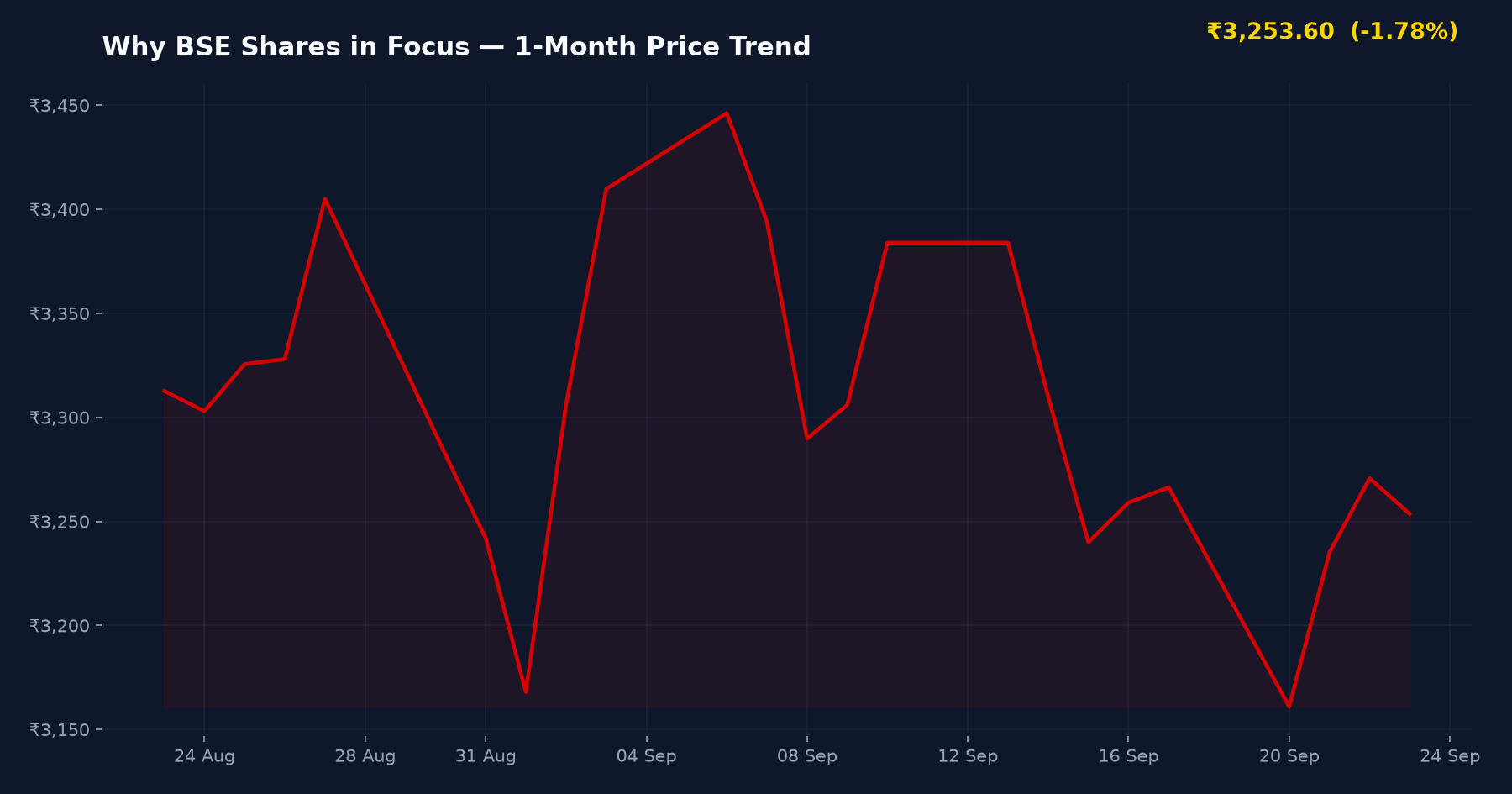
Why BSE Shares in Focus
NSE: BSE
▼ ₹17.10 (-0.52%)
Day Range: ₹3,221.00 – ₹3,304.80
52W Range: ₹2,021.50 – ₹4,446.80
● Real-Time Feed
Market Impact and Grey Market Sentiment
According to coverage published by Livemint and Moneycontrol on Wednesday, September 23, 2026, the grey market premium (GMP) for the NSE hovered around ₹81, signaling a relatively subdued, measured listing sentiment rather than a speculative frenzy. Financial analysts tracking primary platforms note that while immediate listing gains might appear muted relative to smaller high-beta IPOs, institutional sentiment remains overwhelmingly constructive for the broader exchange duopoly.
Macquarie’s Investment Thesis
Global brokerage Macquarie highlighted that exchange infrastructure in India operates within a structural high-moat environment. Initiating an ‘Outperform’ rating with a projected 22% upside, the brokerage emphasized that regulatory tailwinds, robust retail participation, and expanding derivatives volumes provide long-term earnings visibility that justifies premium valuation multiples.
Bull vs. Bear Investor Framework
Growth Catalysts (Bull Case):
- Unmatched operating leverage stemming from India’s rapidly expanding retail equity investor base.
- High barriers to entry in stock exchange operations, securing sustainable cash flow generation.
- Institutional backing from major research desks like Macquarie citing 22% upside potential.
Key Downside Risks (Bear Case):
- Muted immediate listing signals indicated by grey market premiums of 2% to 4%.
- Stringent SEBI regulatory oversight on index derivatives and transaction charges.
- Macroeconomic headwinds that could moderate daily retail turnover volumes.
Peer Valuation Comparison
| Company / Peer Name | P/E Ratio | Market Cap / Scale | Key Note |
|---|---|---|---|
| BSE Limited | 48.2x | Large Cap | Benefiting from market surge and exchange rivalry |
| CDSL | 52.4x | Mid Cap | Depository play benefiting from demat account growth |
| MCX India | 65.0x | Mid Cap | Dominant commodity derivatives platform |
Peer valuation data sourced from Screener.in and Trendlyne
Investment Verdict Summary
Suitable For: Long-term institutional and retail portfolio accumulation
Risk Level: Medium — Reflects regulatory changes in equity derivatives and market volatility
Key Watch Point: Sustained trading volume market share across exchange platforms
Frequently Asked Questions
How does the NSE listing impact BSE shares in the market?
The listing of rival exchange NSE brings heightened institutional focus to the entire exchange sector. Analysts note that increased scrutiny validates market infrastructure valuations and highlights the long-term cash generation capabilities of duopoly exchange operators like BSE.
What do grey market trends and Macquarie’s rating indicate?
A grey market premium of around 2% to 4% (₹81) points to a disciplined, muted listing debut. Meanwhile, Macquarie’s ‘Outperform’ rating and 22% upside target reflect structural optimism regarding long-term transaction volume growth and monetization.
Are stock exchange shares considered safe long-term investments?
Exchange operators benefit from high economic moats, network effects, and recurring revenue from clearing and settlement services. However, investors must monitor regulatory policy shifts from SEBI regarding derivatives trading volumes.
SEBI Compliance & Statutory Disclaimer
The information and analysis presented on IPO Bulletin (ipobulletin.com) are for informational and educational purposes only and do not constitute financial, investment, or legal advice. Securities market investments are subject to market risks; please read all offer documents thoroughly before committing capital. Grey Market Premium (GMP) figures are unofficial, unregulated street estimates. Always consult a SEBI-registered investment advisor before making financial decisions.
Sources cross-checked for this article: Moneycontrol, Livemint, Economic Times, Screener.in, BSE India filings