
MUMBAI / NEW DELHI, SEPTEMBER 17, 2026 — During trading on Thursday, September 17, 2026, shares of Reliance Industries Ltd (RIL) drew intense institutional focus following the central government’s decision to slash the windfall tax on fuel exports, even as the stock navigates a volatile 2026 performance.
Reliance Industries Valuation Analysis
NSE: RELIANCE
▲ +₹3.90 (+0.31%)
Day Range: ₹1,238.50 – ₹1,253.40
52W Range: ₹1,235.30 – ₹1,611.80
● Real-Time Feed
Key Corporate Milestones & Valuation Timeline

| Event / Catalyst Milestone | Exact Calendar Date |
|---|---|
| Q1 Earnings Beat & Brokerage Upgrades | July 20, 2026 |
| Annual General Meeting (AGM) & AI Focus | June 22, 2026 |
| Technical Breakout & Multiple Block Deals | August 6, 2026 |
| Top Nifty Gainer Rally & Technical Cross | September 4, 2026 |
| Windfall Tax Revision & Market Focus | September 17, 2026 |
Financial Parameters & Market Metrics
| Financial Metric | Data Point |
|---|---|
| Primary Sector | Conglomerate (Energy, Telecom, Retail) |
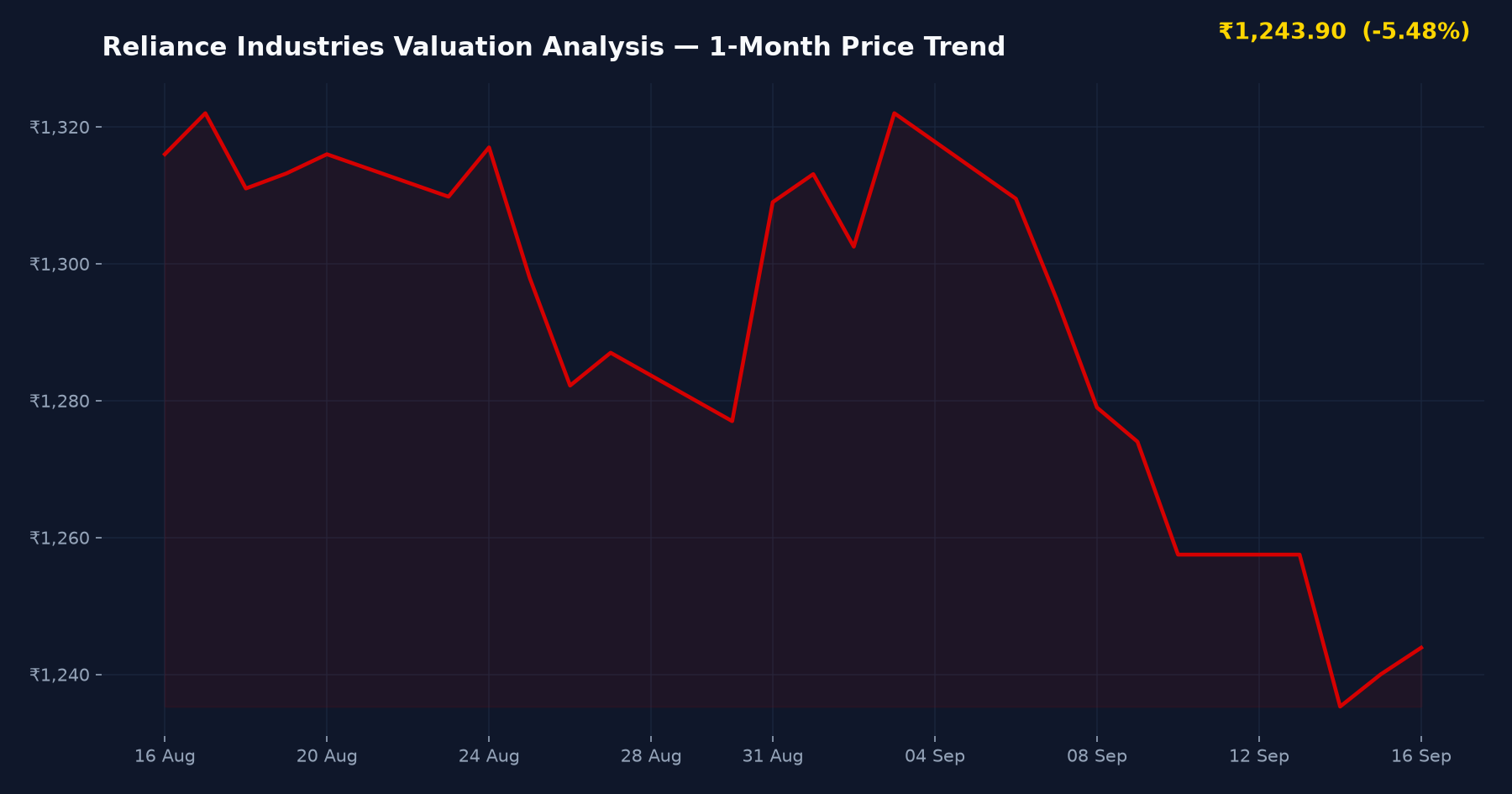
| Year-to-Date Price Action (2026) | Down ~17% to 21% from peak |
| Brokerage Target Potential | Up to 34% – 41% upside (Goldman Sachs) |
| Key Regulatory Catalyst | Fuel export windfall tax reduction |
| Listing Exchanges | BSE & NSE India |
In-Depth Valuation and Market Dynamics
According to market intelligence reports compiled from Moneycontrol and The Economic Times, Reliance Industries shares have experienced a peculiar divergence in 2026. Despite robust refining margins and solid operational performance, the stock witnessed a correction of roughly 17% to 21% over the course of the year. Market analysts suggest that investors have occasionally overlooked the conglomerate’s core energy cash flows while waiting for major corporate catalysts.
Brokerage Sentiment and Growth Triggers
Following strong Q1 earnings reported in July 2026, leading global brokerages including Goldman Sachs maintained an aggressive bullish stance, projecting upside potential of up to 41%. Furthermore, insights shared during the Reliance Annual General Meeting (AGM) on June 22, 2026, highlighted strategic pivots toward Artificial Intelligence (AI), clean energy infrastructure, and potential value unlocks like future digital and retail listings (Jio IPO), prompting brokerages to project medium-term gains of up to 34%.
Technical Resurgence and Block Deals
Data from BSE and NSE filings corroborates recent positive price action, including a 3.5% surge on August 6, 2026, driven by multiple large block deals and a cross above key technical moving averages. Additional momentum materialized on September 4, 2026, when RIL emerged as a top Nifty gainer. The latest government intervention slashing windfall taxes on fuel exports acts as an immediate tailwind for the oil-to-chemicals (O2C) division.
Peer Comparison Context
| Company / Peer Name | P/E Ratio / Multiple | Market Cap / Scale | Key Note |
|---|---|---|---|
| Reliance Industries | Industry Benchmark | Mega-cap conglomerate | Diversified across retail, telecom, and O2C. |
| ONGC | Attractive Valuations | Large-cap upstream player | Directly impacted by crude price volatility. |
| Tata Consultancy Services (TCS) | High Multiple | Mega-cap tech leader | Serves as a benchmark for digital services scaling. |
Peer valuation data sourced from Screener.in and Trendlyne.
Bull vs. Bear Investor Framework
Growth Catalysts (Bull Case):
- Windfall tax reductions directly boost export realizations in the O2C segment.
- Aggressive long-term positioning in Artificial Intelligence (AI) and green energy infrastructure.
- Potential value unlock through future subsidiary public listings (Jio and Reliance Retail).
Downside Risks (Bear Case):
- Global crude oil price fluctuations can compress refining and petrochemical margins.
- Capital expenditure intensity in new energy and telecom infrastructure may pressure near-term free cash flows.
Analytical Investment Verdict
Suitable For: Long-term institutional and retail portfolio accumulation.
Risk Level: Medium — Supported by massive cash generation despite capex headwinds.
Key Watch Point: Execution speed on green energy rollouts and upcoming telecom tariff revisions.
Frequently Asked Questions
Should investors accumulate Reliance Industries shares based on current valuations?
Many major brokerages including Goldman Sachs view the recent 17%-21% correction in 2026 as an attractive entry point, citing potential upside targets supported by energy tailwinds and digital expansion.
How do windfall tax cuts impact Reliance Industries’ financial health?
The government’s reduction of the windfall tax on fuel exports directly alleviates margin pressure on RIL’s refining and export operations, enhancing cash flow generation from its O2C segment.
What are the primary balance sheet strengths and long-term catalysts for RIL?
RIL maintains unmatched cash generation from retail and telecom businesses, complemented by forward-looking investments in artificial intelligence, green energy, and future subsidiary monetization.
SEBI Compliance & Statutory Disclaimer
The information and analysis presented on IPO Bulletin (ipobulletin.com) are for informational and educational purposes only and do not constitute financial, investment, or legal advice. Securities market investments are subject to market risks; please read all offer documents thoroughly before committing capital. Always consult a SEBI-registered investment advisor before making financial decisions.
Sources cross-checked for this article: Moneycontrol, The Economic Times, Livemint, BSE India filings, Screener.in