
MUMBAI / NEW DELHI, SEPTEMBER 24, 2026 — During trading on Thursday, September 24, 2026, the National Stock Exchange (NSE) officially listed its shares on rival BSE, marking a monumental irony in the history of Indian capital markets 34 years after its incorporation.
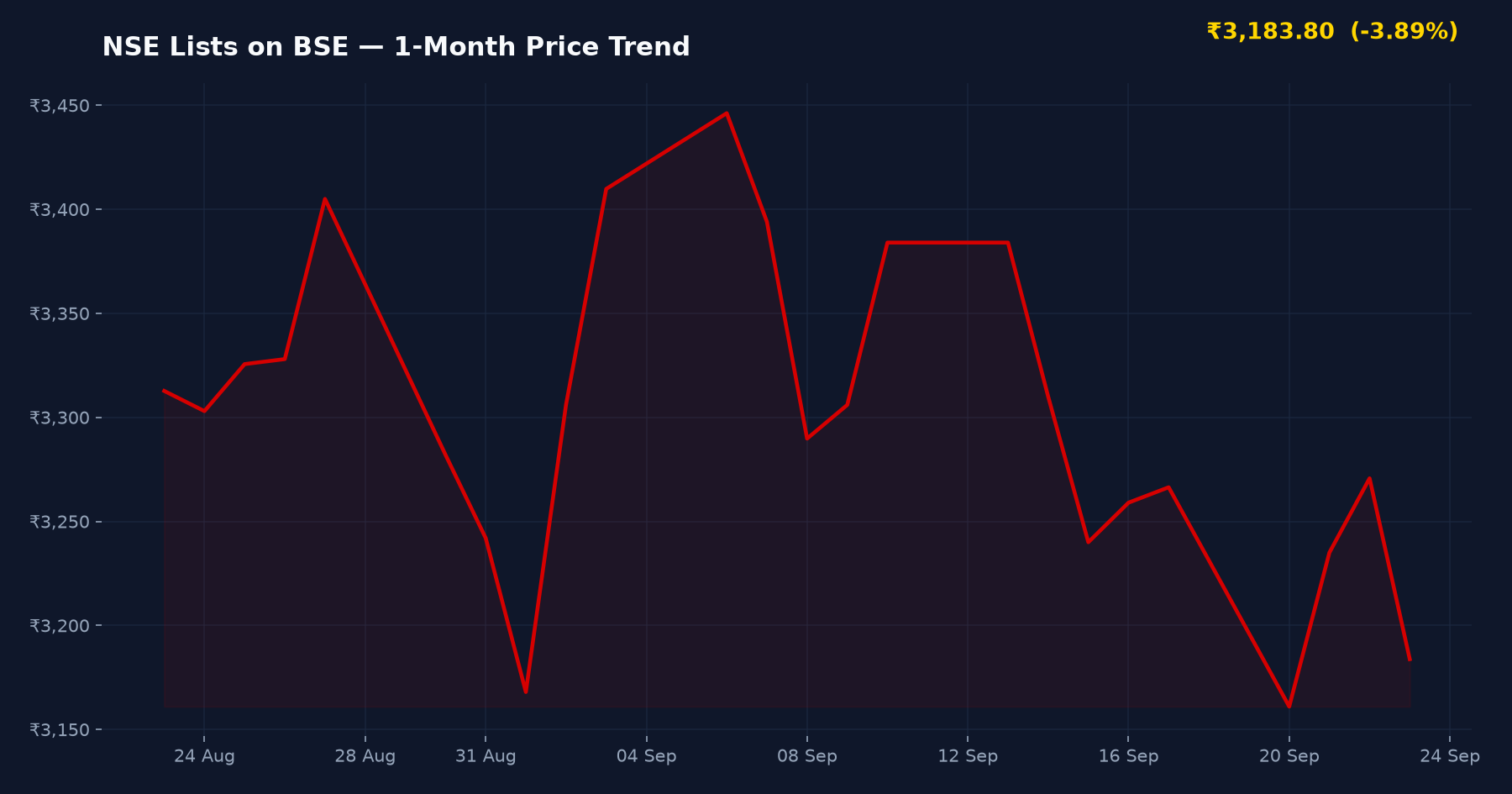
NSE Lists on BSE
NSE: BSE
▼ ₹86.90 (-2.66%)
Day Range: ₹3,175.00 – ₹3,308.00
52W Range: ₹2,021.50 – ₹4,446.80
● Real-Time Feed
Key Timeline & Historical Milestones
| Event / Catalyst Milestone | Exact Calendar Date |
|---|---|
| NSE Incorporation & Origin Post-1991 Reforms | 1992 |
| NSE Listing on BSE Debut Trade | September 24, 2026 |
Key Issue Details & Market Valuation Parameters
| Parameter | Details |
|---|---|
| Primary Exchange Listing | BSE India |
| Historical Catalyst | 1991 Economic Reforms / M.J. Pherwani |
| Face Value & Exchanges | BSE India |
Evolution of Indian Stock Exchanges
The NSE’s journey began following the 1991 economic reforms when visionary leader Manohar J. Pherwani proposed a national, fully computerized exchange to challenge the entrenched floor-trading practices and broker-club dominance of the Bombay Stock Exchange (BSE). Over three decades, the NSE transformed India’s financial landscape through electronic order matching, derivatives market leadership, and high-frequency trading infrastructure.
Regulatory Filings and Market Impact
According to regulatory filings submitted to the BSE and insights compiled from Economic Times market reports, the listing of NSE shares on the BSE platform represents a watershed moment. Brokerage research from Motilal Oswal and ICICIdirect notes that institutional investors have closely tracked the valuation parameters of exchange infrastructure providers, comparing domestic duopoly dynamics against global bourse peers.
Peer Valuation Comparison
| Exchange / Peer Name | Market Role | Key Note |
|---|---|---|
| BSE Limited | Listed Exchange | Pioneer exchange hosting rival NSE shares |
| National Stock Exchange (NSE) | Market Leader | Dominant cash & derivatives volumes |
Peer valuation data sourced from Screener.in and Trendlyne.
Growth Catalysts vs Key Downside Risks
Bull Case (Growth Catalysts): Unmatched market share in equity derivatives, robust transaction fee revenues, and expanding retail participation across tier-2 and tier-3 Indian cities.
Bear Case (Downside Risks): Regulatory scrutiny over algorithmic trading charges, SEBI mandated uniform pricing structures, and potential competition from emerging electronic platforms.
Investment Verdict & Analytical Summary
Suitable For: Long-term institutional and high-net-worth investors seeking financial infrastructure exposure.
Risk Level: Medium — Regulatory policy shifts remain the primary variable affecting exchange profitability.
Key Watch Point: SEBI regulatory guidelines on derivative turnover charges and market infrastructure institution (MII) norms.
Frequently Asked Questions
Should investors evaluate NSE shares based on current exchange valuations?
Investors must analyze trading volumes, regulatory fee structures, and cash generation metrics before acquiring exchange shares in secondary or unlisted markets.
What is the significance of NSE listing its shares on BSE?
It represents a historic convergence of India’s two dominant bourses, providing public price discovery and transparency for an institution founded to challenge BSE’s broker club.
What are the primary balance sheet strengths of the National Stock Exchange?
The NSE boasts a virtually debt-free balance sheet, massive recurring cash reserves from clearing operations, and near-monopoly positioning in index derivatives.
SEBI Compliance & Statutory Disclaimer
The information and analysis presented on IPO Bulletin (ipobulletin.com) are for informational and educational purposes only and do not constitute financial, investment, or legal advice. Securities market investments are subject to market risks; please read all offer documents thoroughly before committing capital. Always consult a SEBI-registered investment advisor before making financial decisions.
Sources cross-checked for this article: Economic Times, BSE India filings, Moneycontrol, Screener.in, Trendlyne.