

MUMBAI / NEW DELHI, SEPTEMBER 23, 2026 — During trading on Wednesday, September 23, 2026, Indian textile equities staged a strong technical recovery, rebounding by up to 10% across major counters. According to market data reports compiled from Moneycontrol and equity trading feeds, the sharp bounce-back erased losses from the previous session triggered by market anxieties surrounding international trade and regulatory shifts.
| Event / Catalyst Milestone | Exact Calendar Date |
|---|---|
| Textile Sector Correction (US-Bangladesh Trade Deal Impact) | February 11, 2026 |
| RoDTEP Incentive Revision Announcement | February 24, 2026 |
| Nuvama Sector Coverage & Target Initiation | August 02, 2026 |
| Tariff-Triggered Selloff & Subsequent Rebound | September 21–22, 2026 |
Why Raymond & Gokaldas Shares Are Surging
NSE: RAYMOND
▲ +₹32.00 (+2.95%)
Day Range: ₹1,089.95 – ₹1,193.40
52W Range: ₹320.00 – ₹1,193.40
● Real-Time Feed
Sector Performance & Key Stock Movements
The broader textile sector witnessed heightened volatility following global policy shifts. Raymond led the recovery rally with an impressive 10% surge, while key sector players including Gokaldas Exports, Pearl Global Industries, Arvind, and Vardhman Textiles participated in the strong rebound. Financial tracking data highlights that investors stepped in to accumulate quality small-cap and mid-cap textile names following recent price corrections.
| Stock / Entity | Daily Rebound / Movement | Key Catalyst |
|---|---|---|
| Raymond | +10.0% | Bargain hunting & short covering |
| Gokaldas Exports | +4.5% | Institutional accumulation |
| Arvind / Vardhman | +3.2% to +5.0% | Sector-wide value buying |
Macroeconomic Headwinds and Export Dynamics
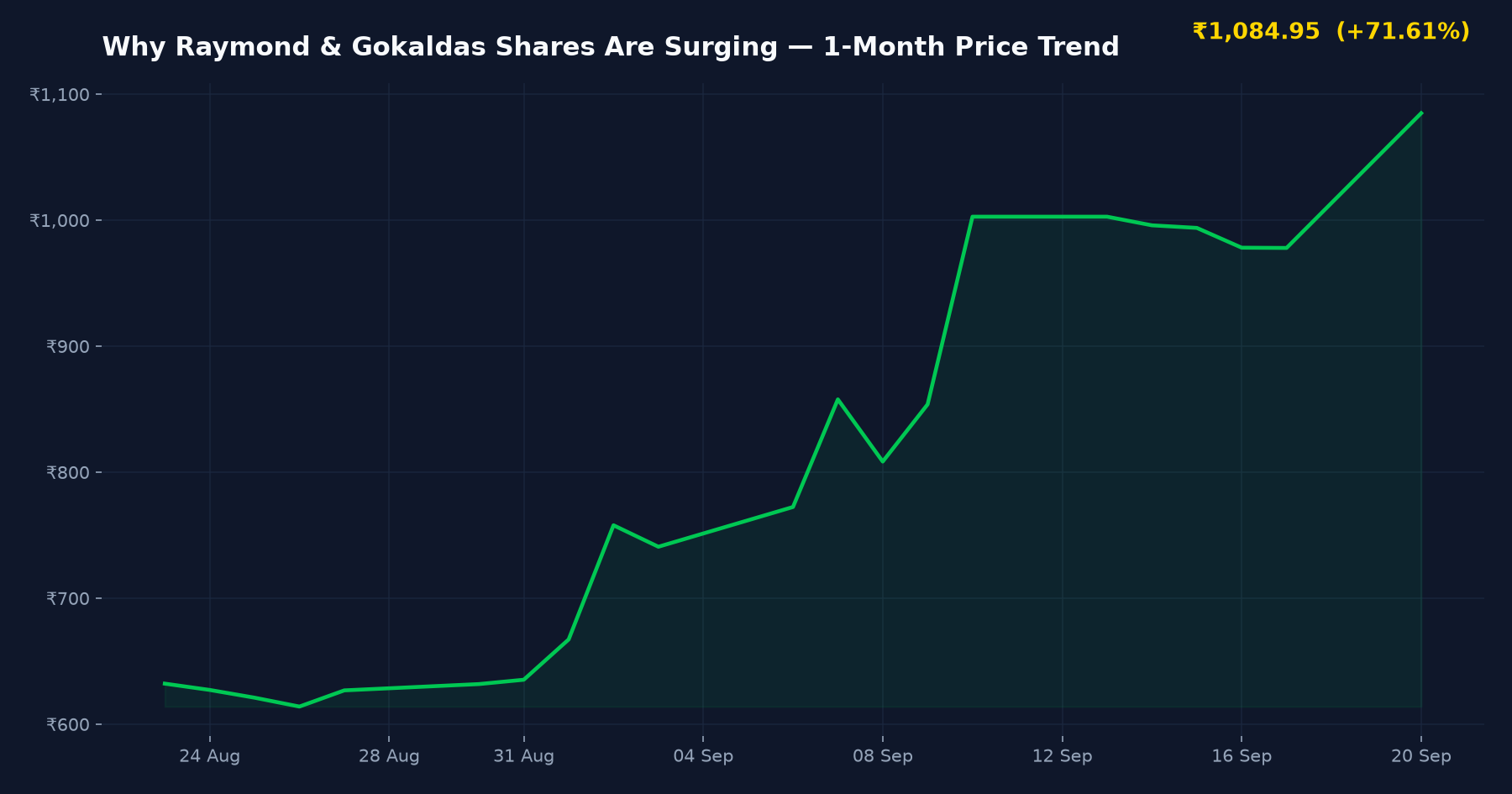
According to fundamental research and brokerage notes compiled from Moneycontrol and Economic Times, Indian textile exporters have faced intermittent headwinds over the year. Earlier policy adjustments, including the RoDTEP export incentive reductions implemented in February 2026, alongside shifting US trade pacts with competing nations like Bangladesh, have kept valuations under pressure. However, structural tailwinds such as global supply chain diversification and domestic capital expenditure booms continue to support medium-term growth theses.
Bull vs. Bear Catalysts
Growth Catalysts (Bullish Case):
- Strong global sourcing tailwinds as international brands look to de-risk manufacturing away from single geographies.
- Robust balance sheet health and aggressive domestic capex programs undertaken by industry leaders.
- Attractive entry valuations following periodic macroeconomic selloffs and tariff-induced corrections.
Downside Risks (Bearish Case):
- Vulnerability to sudden US tariff announcements and geopolitical trade friction.
- Margin compression risks arising from potential government incentive cuts or export duty revisions.
- Intense regional competition from Southeast Asian and South Asian exporters.
Investment Verdict & Analytical Summary
Suitable For: Long-term positional investors with high-risk appetite
Risk Level: High — subject to global trade policy volatility
Key Watch Point: Ongoing US trade legislation and quarterly export volume growth
Frequently Asked Questions
Why did Indian textile stocks experience a sudden selloff and subsequent rebound?
Textile stocks faced initial downward pressure following US policy announcements and trade bill developments. However, strong fundamental demand, value buying, and bargain hunting drove a sharp technical rebound of up to 10% across counters like Raymond and Gokaldas Exports.
Are textile stocks a good long-term investment in 2026?
While structural export tailwinds and global supply chain shifts favor Indian textile manufacturers, investors must account for cyclical volatility, tariff risks, and government incentive revisions before committing capital.
How do US trade policies impact Indian garment and textile exporters?
US trade agreements, tariff adjustments, and sanctions bills directly influence export competitiveness against rival nations such as Bangladesh and Vietnam, often triggering short-term stock price fluctuations.
SEBI Compliance & Statutory Disclaimer
The information and analysis presented on IPO Bulletin (ipobulletin.com) are for informational and educational purposes only and do not constitute financial, investment, or legal advice. Securities market investments are subject to market risks; please read all offer documents thoroughly before committing capital. Always consult a SEBI-registered investment advisor before making financial decisions.
Sources cross-checked for this article: Moneycontrol, Economic Times, Livemint, BSE India filings