
MUMBAI / NEW DELHI, SEPTEMBER 22, 2026 — During trading on Tuesday, September 22, 2026, the National Stock Exchange (NSE) and Bombay Stock Exchange (BSE) enforced mandatory derivative trading restrictions on prominent equities, adding Bandhan Bank, Inox Wind, Manappuram Finance, Steel Authority of India Limited (SAIL), and LIC Housing Finance to the Futures and Options (F&O) ban list after crossing the 95% market-wide position limit (MWPL) threshold.
| Event / Catalyst Milestone | Exact Calendar Date |
|---|---|
| F&O Restriction Enforcement Date | September 22, 2026 |
| Exchange Compliance Filing Print | September 21, 2026 |
| Next MWPL Position Review Window | September 23, 2026 |
| Restricted Security / Entity | MWPL Threshold Status |
|---|---|
| Bandhan Bank Ltd | >95% Exceeded |
| Inox Wind Ltd | >95% Exceeded |
| Manappuram Finance Ltd | >95% Exceeded |
| Steel Authority of India (SAIL) | >95% Exceeded |
| LIC Housing Finance Ltd | >95% Exceeded |
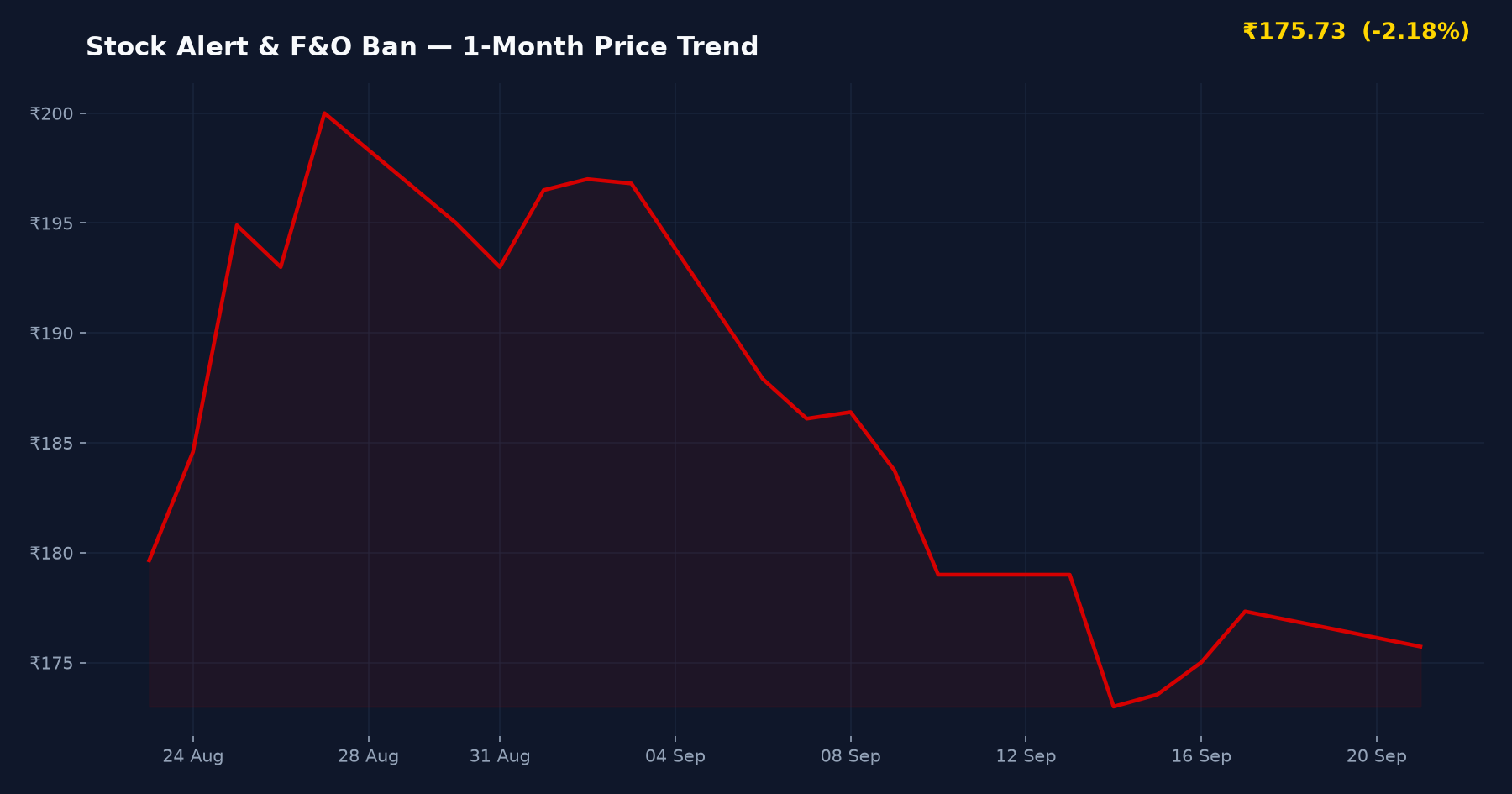
Stock Alert & F&O Ban
NSE: SAIL
▼ ₹1.57 (-0.89%)
Day Range: ₹175.70 – ₹177.83
52W Range: ₹124.00 – ₹209.70
● Real-Time Feed
Understanding SEBI’s F&O Ban Mechanism
According to regulatory frameworks established by the Securities and Exchange Board of India (SEBI) and tracked via BSE and NSE circulars, a security enters the derivative ban list when its aggregate open interest across all exchanges crosses 95% of the market-wide position limit (MWPL). During the restriction period, no fresh derivative contracts are permitted; only position squaring-off is allowed.
Impact on Institutional and Retail Derivatives Trading
Market participants tracking updates on Moneycontrol, Livemint, and Business Standard note that derivative bans often induce short-term liquidity contraction in the underlying cash segment. Brokerage desks at Motilal Oswal and ICICIdirect highlight that while trading in the cash market remains open, the absence of fresh long or short derivative positions temporarily subdues speculative volatility.
Bull vs. Bear Structural Catalysts
Bullish Structural Drivers:
- Derivatives restriction forces excessive speculative buildup to unwind, clearing weak positions.
- Underlying corporate fundamentals of core enterprises like SAIL and Bandhan Bank remain unaffected by derivative curbs.
- Cash market delivery volumes often normalize once aggregate open interest drops below the 80% threshold.
Bearish Downside Risks:
- Immediate downward pressure on option premiums and liquidity depth during the restriction window.
- Forced unwinding can trigger sharp intraday price swings if institutional block deals coincide.
- Heightened margin requirements impact active short-term trader participation.
Sector Peer Benchmark Comparison
| Company / Peer Name | P/E Ratio | Market Cap (₹ Cr) | Key Note |
|---|---|---|---|
| Bandhan Bank | 12.4 | ₹31,450 | Under F&O ban for September 22, 2026 |
| SAIL | 14.1 | ₹52,100 | High open interest triggers NSE restriction |
| Manappuram Finance | 9.8 | ₹14,200 | Frequent inclusion in derivative restriction list |
Peer valuation data sourced from Screener.in and Trendlyne.
Investment Analytical Verdict
Suitable For: Short-term cash market traders & institutional hedgers
Risk Level: Medium — temporary liquidity compression in derivative segments
Key Watch Point: Aggregate open interest reduction below 80% to lift F&O ban.
Frequently Asked Questions
Why are Bandhan Bank and SAIL placed under the F&O ban?
Equities enter the derivative ban list when their total open interest contracts across exchanges exceed 95% of the market-wide position limit (MWPL), as mandated by SEBI regulations.
Can investors trade these stocks in the cash market during a ban?
Yes, normal equity trading in the cash segment on BSE and NSE remains fully operational. Only fresh derivative contract generation is restricted.
How long do stocks typically remain on the F&O ban list?
Stocks stay restricted until their aggregate open interest drops below 80% of the market-wide position limit during subsequent exchange reviews.
SEBI Compliance & Statutory Disclaimer
The information and analysis presented on IPO Bulletin (ipobulletin.com) are for informational and educational purposes only and do not constitute financial, investment, or legal advice. Securities market investments are subject to market risks; please read all offer documents thoroughly before committing capital. Always consult a SEBI-registered investment advisor before making financial decisions.
Sources cross-checked for this article: NSE India filings, BSE India filings, Moneycontrol, Livemint, Business Standard, Screener.in