
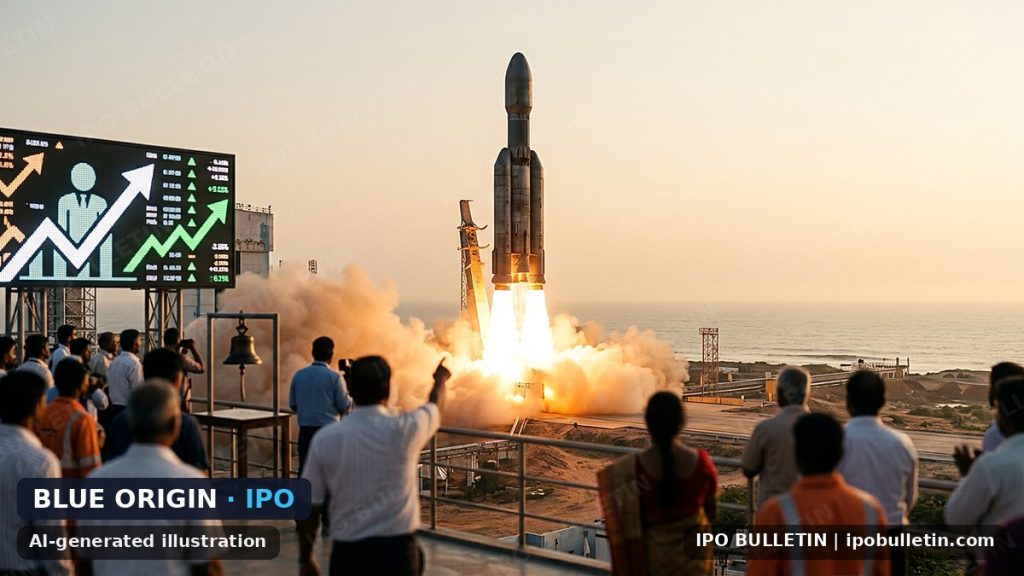
MUMBAI / NEW DELHI, OCTOBER 08, 2026 — Amazon founder Jeff Bezos recently indicated that his privately-held space exploration company, Blue Origin, is likely to pursue an Initial Public Offering (IPO) in the coming years. This strategic announcement, made during a public statement, signals a potential major development for the burgeoning commercial space sector and could reshape the investment landscape for space-focused ventures.
Bezos’s comments, widely reported by financial news outlets including Reuters and The Economic Times, underscore the growing maturity and capital requirements of the commercial space industry. While no specific timeline or valuation details were provided, the prospect of a Blue Origin IPO introduces a significant new player into the public markets, potentially rivaling the scale and investor interest seen in other high-profile space ventures.
Key Dates & Timeline Calendar
| Event / Catalyst Milestone | Exact Calendar Date |
|---|---|
| Bezos signals Blue Origin IPO | October 08, 2026 |
| Bezos/Mittal Liverpool deal nears | August 10, 2026 |
| Blue Origin rocket engine test explosion | May 29, 2026 |
| Elon Musk becomes trillionaire; SpaceX IPO | June 12, 2026 |
| Bezos on AI job loss fears | June 11, 2026 |
| SpaceX included in Space stock ETFs | May 11, 2026 |
In-Depth Analysis: Blue Origin’s Trajectory Towards Public Markets
Blue Origin, founded by Jeff Bezos in 2000, has been a significant private player in the space industry, focusing on various segments including suborbital and orbital spaceflight, rocket engine development, and lunar landers. The company’s vision, ‘Gradatim Ferociter’ (Step by Step, Ferociously), reflects its long-term approach to making space accessible.
Business Model & Market Position
Blue Origin’s operations span several critical areas: New Shepard for suborbital space tourism and scientific research, and the upcoming New Glenn heavy-lift orbital launch vehicle designed for satellite deployment and deep-space missions. The company also develops BE-4 rocket engines, which are crucial for its own rockets and also supplied to other launch providers. This diversified approach positions Blue Origin to capture various revenue streams within the rapidly expanding space economy, as highlighted by industry analysis from Livemint and Moneycontrol.
Competitive Landscape & Sector Dynamics
The commercial space sector is characterized by intense competition, primarily from Elon Musk’s SpaceX, which has already made significant strides in reusability and launch frequency. The ground truth intelligence from Livemint on June 12, 2026, even noted Musk becoming a trillionaire following a ‘world’s biggest IPO’ for SpaceX, underscoring the massive valuations possible in this sector. Other players like Virgin Galactic also compete in specific niches. A Blue Origin IPO would intensify this rivalry, potentially driving further innovation and consolidation. GMP data is pending initial price discovery across primary tracking platforms (Chittorgarh & IPOWatch) for any future IPO.
Strategic Implications of an IPO
An IPO would provide Blue Origin with substantial capital to fund its ambitious projects, which are inherently expensive and long-term. This capital infusion could accelerate the development of New Glenn, expand manufacturing capabilities, and invest further in advanced technologies like lunar landers. For investors, it would offer a direct opportunity to participate in the high-growth space sector, backed by the vision and resources of Jeff Bezos, a factor that could attract significant institutional and retail demand.
Investment Framework: Bull vs. Bear Case
Growth Catalysts (Bull Case)
- Sector Growth: The global space economy is projected for exponential growth, driven by satellite internet, space tourism, and government contracts.
- Bezos’s Backing: Jeff Bezos’s long-term vision and financial commitment provide a strong foundation and strategic direction.
- Diversified Offerings: From suborbital tourism to heavy-lift launches and engine manufacturing, Blue Origin has multiple potential revenue streams.
- Technological Prowess: Development of advanced reusable rocket technology and powerful engines positions it for future market leadership.
Key Downside Risks (Bear Case)
- High Capital Intensity: Space exploration requires massive, continuous investment with long gestation periods for returns.
- Intense Competition: Fierce rivalry, particularly from SpaceX, could pressure pricing and market share.
- Technical Failures: The industry is prone to setbacks, such as the New Glenn engine test explosion reported by Moneycontrol on May 29, 2026, which can cause significant delays and cost overruns.
- Regulatory Hurdles: Stringent and evolving space regulations could impact operations and expansion plans.
- Profitability Challenges: Achieving consistent profitability in the early stages of commercial space is a significant challenge.
Frequently Asked Questions
What are the implications of a potential Blue Origin IPO for the space sector?
A Blue Origin IPO would significantly boost investor confidence in the commercial space sector, potentially attracting more capital and accelerating technological advancements. It would also intensify competition among major players like SpaceX, driving innovation and potentially leading to more accessible and affordable space services.
What are the key business areas and competitive landscape for Blue Origin?
Blue Origin operates in suborbital space tourism (New Shepard), orbital launch services (New Glenn), and rocket engine manufacturing (BE-4). Its primary competitor is SpaceX, led by Elon Musk, which has established a dominant position in launch services and satellite internet. Other players include Virgin Galactic in space tourism.
What risks should investors consider regarding a future Blue Origin IPO?
Investors should consider the high capital expenditure required for space ventures, the intense competitive environment, and the inherent risks of technical failures, as evidenced by past incidents like the New Glenn engine test explosion. Regulatory changes and the long gestation period for profitability are also significant factors.
SEBI Compliance & Statutory Disclaimer
The information and analysis presented on IPO Bulletin (ipobulletin.com) are for informational and educational purposes only and do not constitute financial, investment, or legal advice. Securities market investments are subject to market risks; please read all offer documents (DRHP/RHP) thoroughly before committing capital. Grey Market Premium (GMP) figures are unofficial, unregulated street estimates. Always consult a SEBI-registered investment advisor before making financial decisions.
Sources referenced: Reuters, Economic Times, Livemint, Moneycontrol
Reusing this article or its images? Credit IPO Bulletin and link to https://ipobulletin.com/2026/10/blue-origin-ipo-what-bezoss-signal-means-for-space-sector-investors.html. Content licence.
💬 Reader Discussions & Insights
Only registered readers can post comments to keep discussions insightful and free of scam tips. Passwordless email login takes less than 30 seconds.
No comments yet on this analysis. Be the first reader to share your perspective!