
MUMBAI / NEW DELHI, SEPTEMBER 29, 2026 — During trading on Tuesday, September 29, 2026, the Nifty 50 index faced intense selling pressure, breaching the crucial 23,000 mark and witnessing Nifty September futures trade at a notable discount. According to market data and reports from Livemint and Business Standard, heavy-weight contracts including HDFC, Reliance Industries, and Infosys saw massive volumes as the market correction deepened amid crude oil shocks and broader macroeconomic headwinds.
| Market Catalyst / Event Milestone | Exact Calendar Date |
|---|---|
| Nifty Monthly Expiry & CAS Integration | September 29, 2026 |
| Sensex & Nifty Rebound / Crash Window | September 28–29, 2026 |
| Upcoming Trading Session Outlook | September 30, 2026 |
NIFTY 50
INDEX
▼ ₹424.30 (-1.83%)
Day Range: ₹22,569.65 – ₹22,753.25
52W Range: ₹22,182.55 – ₹26,373.20
● Real-Time Feed
Understanding the September Futures Discount and Market Selloff
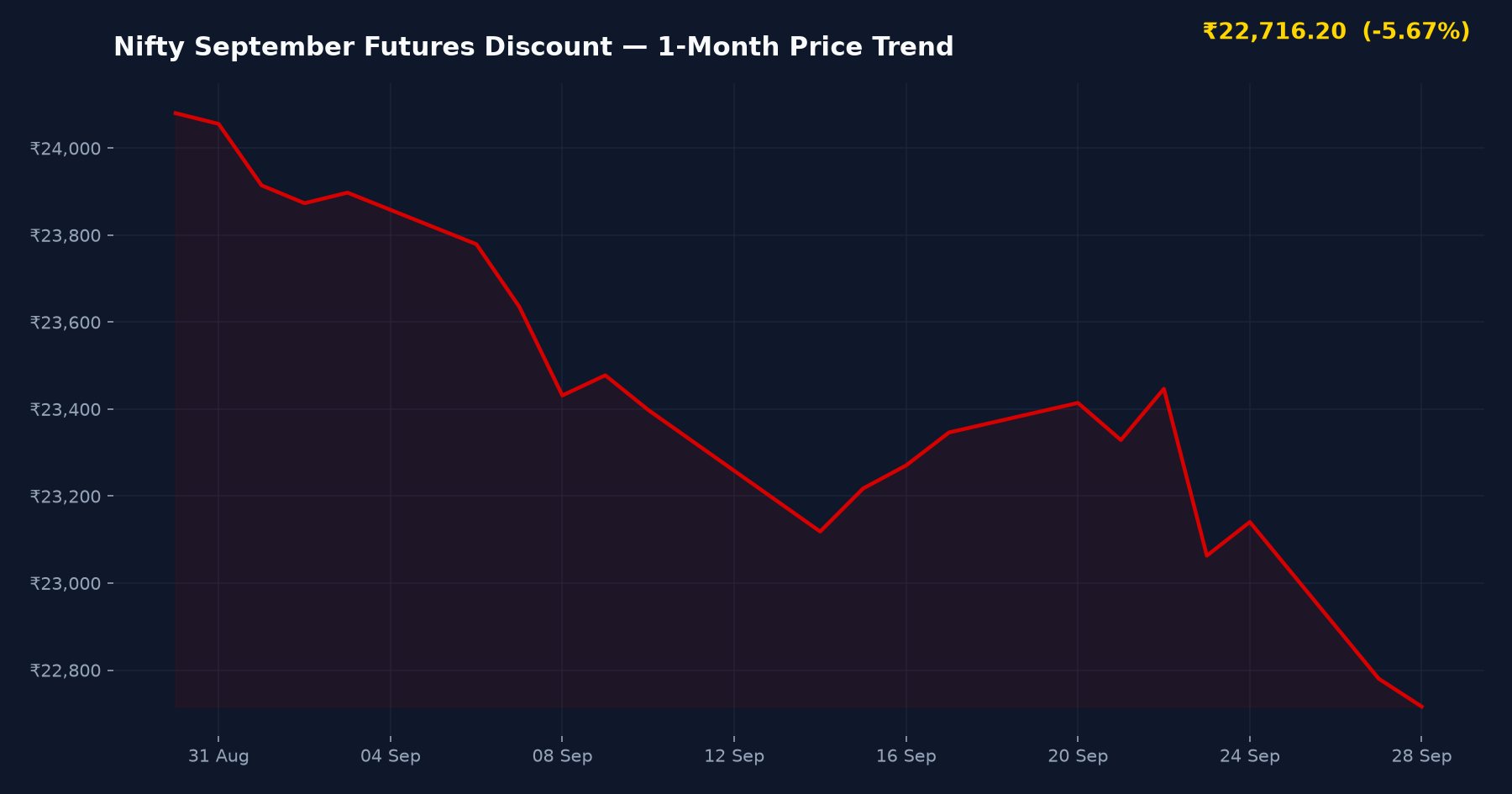
On Tuesday, September 29, 2026, market participants observed Nifty September futures trading at a discount to the spot index, signaling heightened bearish sentiment as the monthly derivative series approached its expiry. According to comprehensive market coverage by Livemint and Business Standard, the benchmark index plummeted sharply, wiping out over 550 points across two consecutive sessions and dragging Sensex down by 1,800 points. Analysts tracking primary order flows noted that heavyweight counters like Reliance Industries, HDFC, and Infosys experienced heavy selling, directly impacting derivative pricing and widening the futures discount.
Key Drivers Behind the 23,000 Breakdown
The collapse below the psychological 23,000 support level was triggered by a confluence of global and domestic factors. Financial commentaries compiled from Moneycontrol and Livemint highlight that crude oil price shocks, subdued Asian market cues (including Kospi, Nikkei, and Taiwan indices), and persistent institutional capital outflows created a perfect storm. Furthermore, the convergence of the monthly futures expiry with CAS (Client Asset Segregation / Clearing Corporation) mechanisms intensified volatility during the final trading hours on September 29, 2026.
Bull vs Bear Market Framework
As traders navigate extreme volatility, technical analysts are divided on the immediate trajectory of the Indian equity markets.
Bullish Catalysts
- Oversold Rebound Potential: Rapid corrections from near six-month lows often invite value buying by domestic institutional investors (DIIs).
- Strong Economic Fundamentals: India’s macroeconomic indicators remain robust despite short-term global commodity shocks.
- Intraday Recovery Resiliency: Historical trends show that sharp liquidations frequently precede strong technical relief rallies following monthly contract expiries.
Bearish Risks
- Support Breakdown: Breaking key long-term supports below 23,000 opens the possibility of a deeper slide toward 21,000 levels.
- Crude Shock Vulnerability: Spiking global crude oil prices continue to threaten India’s current account deficit and corporate margin stability.
- FII Liquidation: Sustained foreign institutional investor selling adds structural pressure across large-cap index heavyweights.
What to check before trading expiry sessions
- Verify open interest (OI) change and roll-over data across index heavyweights like HDFC, Reliance, and Infosys.
- Monitor GIFT Nifty and global Asian market cues (Kospi, Nikkei, Taiwan) for pre-market sentiment orientation.
- Check derivative discount/premium spreads to gauge institutional hedging intensity.
Frequently Asked Questions
What does a Nifty futures discount indicate during expiry sessions?
A Nifty futures discount occurs when the futures contract trades below the spot index price. This typically signals short-term bearish sentiment, aggressive short-selling, or heavy hedging by market participants anticipating further downward movement ahead of the monthly contract expiry.
Why did the Nifty 50 break below the 23,000 level on September 29, 2026?
The breakdown was driven by a combination of severe crude oil shocks, persistent foreign capital outflows, weak global cues across Asian equity benchmarks, and heavy liquidation in market heavyweights like Reliance Industries, HDFC, and Infosys.
How do global cues impact the Indian stock market during volatile expiry days?
Indian indices closely track overnight US market trends and morning Asian indices such as GIFT Nifty, Kospi, and Nikkei. Weakness in these regional benchmarks amplifies domestic selling pressure, particularly on expiry days when derivative unwinding accelerates.
SEBI Compliance & Statutory Disclaimer
The information and analysis presented on IPO Bulletin (ipobulletin.com) are for informational and educational purposes only and do not constitute financial, investment, or legal advice. Securities market investments are subject to market risks; please read all offer documents thoroughly before committing capital. Always consult a SEBI-registered investment advisor before making financial decisions.
Sources referenced: Business Standard, Livemint, Moneycontrol, BSE India filings
Reusing this article or its images? Credit IPO Bulletin and link to https://ipobulletin.com/2026/09/nifty-september-futures-discount-why-heavy-selloff-sparks-21k-bear-views.html. Content licence.