
MUMBAI / NEW DELHI, SEPTEMBER 30, 2026 — During trading on Wednesday, September 30, 2026, fresh institutional analytics compiled across primary exchanges revealed that more than 50% of companies within the BSE 500 index are currently trading below their historical five-year average valuations. This broad market compression occurs alongside broader macroeconomic shifts tracked by leading financial dailies including The Economic Times and Mint.
| Valuation & Market Metric | Observed Data Point |
|---|---|
| Index Universe Tracked | BSE 500 Companies |
| Stocks Below 5-Year P/E Average | 202 Stocks (>50%) |
| Two-Year Return Laggards | Nearly Two-Thirds |
| Primary Exchange Benchmarks | BSE & NSE India |
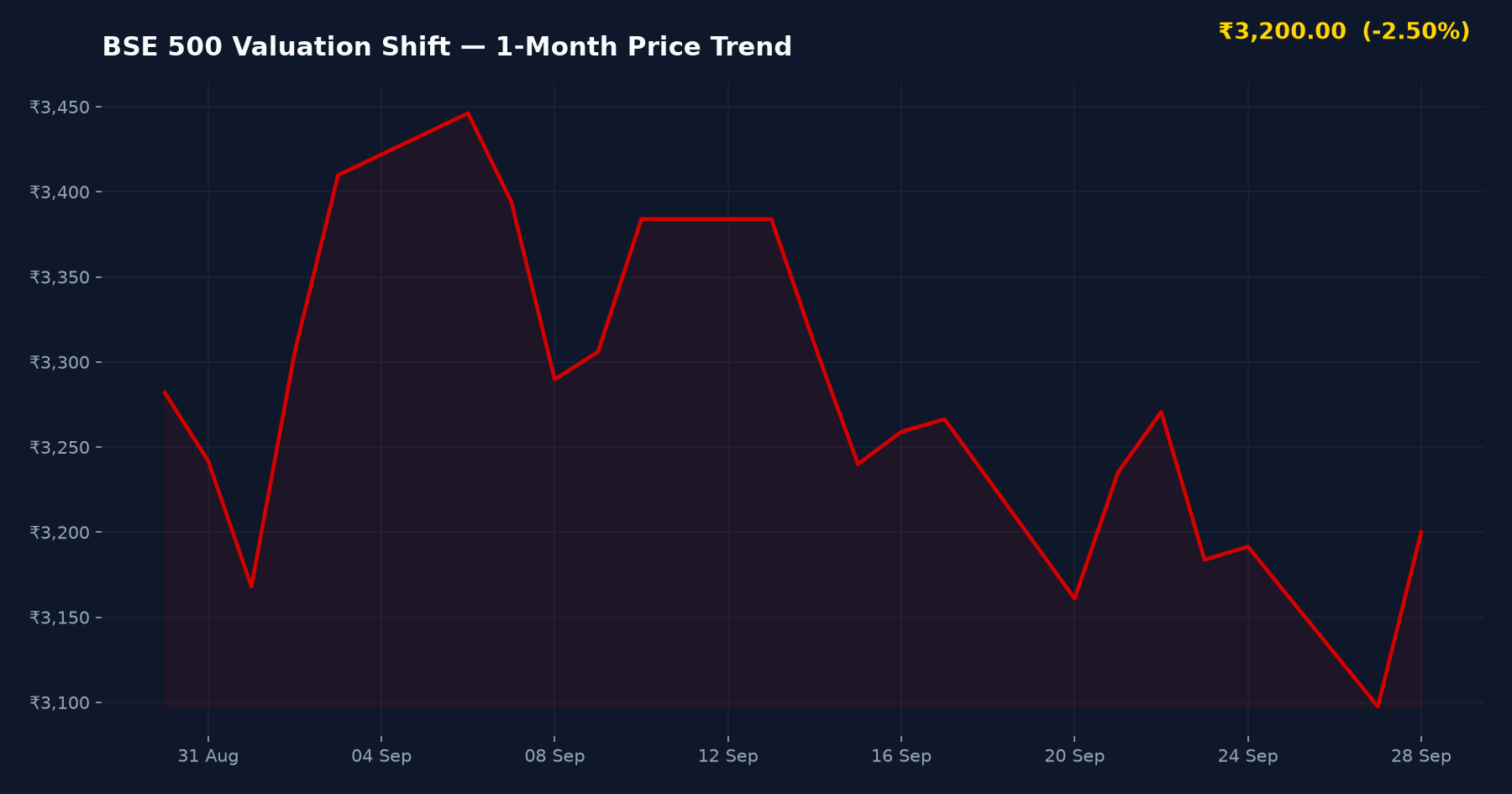
BSE 500 Valuation Shift
NSE: BSE
▲ +₹102.50 (+3.31%)
Day Range: ₹3,100.00 – ₹3,200.00
52W Range: ₹2,035.10 – ₹4,446.80
● Real-Time Feed
Valuation Compression Across BSE 500 Benchmarks
According to fundamental screening data and market research compiled via Screener.in and Trendlyne, the divergence between headline index numbers and underlying mid-cap and small-cap stock performance has widened significantly. Geopolitical headwinds, volatile global energy pricing, and fluctuating commodity costs have pressured operating margins across logistics, manufacturing, and cyclical sectors.
Brokerage intelligence from Motilal Oswal and ICICIdirect notes that close to two-thirds of the constituents within the broader universe have delivered flat or negative returns over the trailing 24-month period ending September 2026. This prolonged consolidation phase has forced value-focused institutional portfolio managers to re-examine balance sheet resilience, debt-to-equity ratios, and operating cash flows.
Bull vs. Bear Market Catalysts
Market sentiment reflected across retail and institutional forums such as Reddit r/IndianStockMarket and ValuePickr highlights a sharp division in outlook:
- Bull Catalysts: Attractive margin of safety for long-term investors; multiple contraction provides entry points for fundamentally sound balance sheets with strong return on capital employed (ROCE).
- Bear Risks: Continued margin pressure from volatile global commodity inputs, subdued earnings growth among cyclical laggards, and persistent foreign institutional investor (FII) outflows.
What to Check Before Investing
- Verify individual stock P/E ratios against their historical 5-year median bands rather than trailing industry averages.
- Examine operating cash flow consistency and interest coverage ratios on Screener.in or corporate BSE filings.
- Assess promoter pledging levels and institutional holding changes over the past four quarters.
- Evaluate exposure to raw material price volatility and foreign exchange risks.
Frequently Asked Questions
Why are over 200 BSE 500 stocks trading below their five-year average valuations?
Persistent macroeconomic headwinds, volatile global energy prices, and compressed corporate earnings growth across cyclical sectors have driven multiple compression. Investors have rotated capital toward select large-cap leaders, leaving many mid- and small-cap equities trading at historical valuation discounts.
Does a low P/E ratio guarantee a stock is a good investment?
No. A low P/E ratio can sometimes indicate a value trap caused by structural headwinds, weak earnings growth, or poor corporate governance. Fundamental analysis of cash flows, debt levels, and competitive moats is essential before committing capital.
Where can investors track historical valuation multiples for Indian equities?
Investors can utilize fundamental research platforms such as Screener.in, Trendlyne, StockEdge, and official regulatory disclosures hosted on BSE India and NSE India to analyze multi-year financial ratios.
SEBI Compliance & Statutory Disclaimer
The information and analysis presented on IPO Bulletin (ipobulletin.com) are for informational and educational purposes only and do not constitute financial, investment, or legal advice. Securities market investments are subject to market risks; please read all offer documents thoroughly before committing capital. Always consult a SEBI-registered investment advisor before making financial decisions.
Sources referenced: The Economic Times, Screener.in, Trendlyne, BSE India filings, Motilal Oswal
Reusing this article or its images? Credit IPO Bulletin and link to https://ipobulletin.com/2026/09/bse-500-valuation-shift-202-equities-trading-under-five-year-multiples.html. Content licence.