
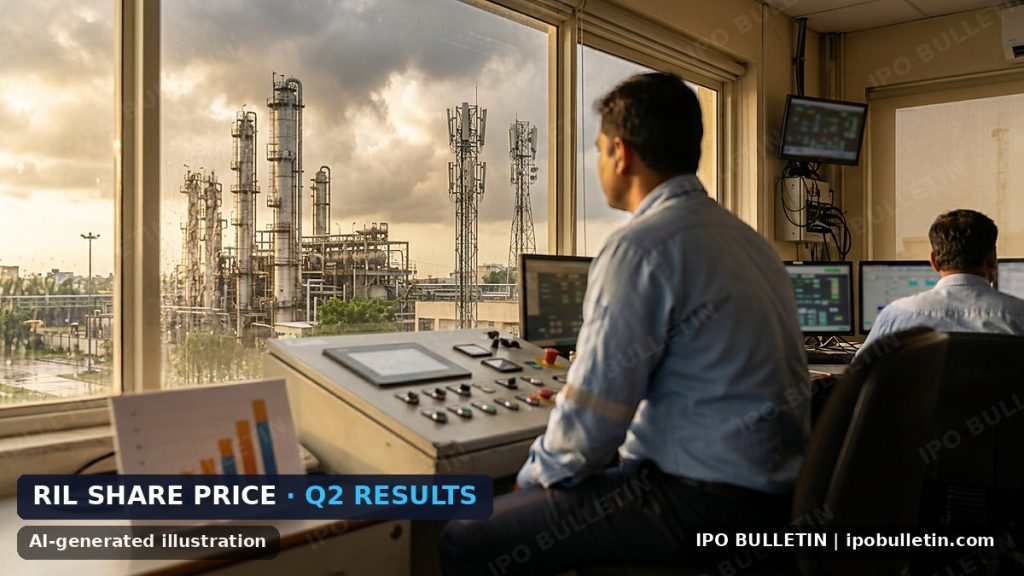
MUMBAI / NEW DELHI, NOVEMBER 02, 2026 — During trading on Monday, November 02, 2026, shares of Reliance Industries Limited (RIL) jumped 11.6% on the National Stock Exchange (NSE), recording their largest single-day percentage gain since April 2020. The sharp move came after the oil-to-telecom conglomerate delivered stronger-than-expected financial results for the second quarter of FY27 (Q2 FY27), driving its market capitalization past ₹17 Lakh Crore and lifting the benchmark Nifty 50 index above 23,400.
Key Takeaways at a Glance
- Price Action & Valuation: RIL advanced up to 11.6% intraday, crossing key technical resistance levels and lifting total valuation above ₹17 Lakh Crore.
- Benchmark Index Impact: The rally contributed heavily to the BSE Sensex advancing 1,233 points and the Nifty 50 settling near 23,450.
- Earnings triggers: Operating outperformance was anchored by an earnings rebound in the Oil-to-Chemicals (O2C) segment alongside steady subscriber growth at telecom unit Jio Platforms.
RIL Q2 FY27 Trading Session & triggers Milestones
The stock’s surge on Monday, November 02, 2026, ended months of consolidation for India’s heavyweight constituent. A review of exchange disclosures and session activity establishes the following timeline:
| Event / Market Milestone | Exact Calendar Date |
|---|---|
| Q2 FY27 Financial Results Submission to BSE & NSE | November 02, 2026 |
| Market Cap Crosses ₹17 Lakh Crore Mark | November 02, 2026 |
| Single-Day 11.6% Outperformance Recorded | November 02, 2026 |
Market Metrics & Index Impact Overview
Reliance Industries holds the single largest weighting in benchmark indices. When the stock moved over 11% during morning trade on November 02, 2026, it created an immediate tailwind across the Indian market indices dashboard. The table below outlines key statistical metrics recorded during the session:
| Market Indicator / Financial Metric | Reported Session Figure |
|---|---|
| RIL Intraday Share Price Gain | 11.60% |
| Consolidated Market Capitalization Milestone | ₹17.00 Lakh Crore |
| BSE Sensex Session Surge | +1,233 Points |
| NSE Nifty 50 Closing Level | 23,450 |
| Comparative Historical Gain Benchmark | Best Since April 2020 |
What Drove the Surge in Reliance Industries Stock?
According to coverage from Moneycontrol and Livemint, the primary driver behind the sudden surge was operational resilience across multiple core business verticals. Market participants had anticipated margin compression in refining and petrochemicals, but actual disclosures filed with BSE India and NSE India showed an upside surprise.
Oil-to-Chemicals (O2C) Operating Margin Rebound
The energy and refining division recorded stable throughput and improved product spreads, offsetting broader regional softening in petrochemical demand. Operating earnings from the traditional refining setup provided downside protection while digital consumer verticals continued compounding cash flows.
Digital & Telecom Growth at Jio Platforms
Reliance Jio reported steady average revenue per user (ARPU) expansion and ongoing 5G network monetization. Institutional research published on Moneycontrol highlighted that stable subscriber metrics and operational leverage in consumer tech reinforced institutional confidence, leading institutional desks to price in potential upside revisions of up to 33% from previous resistance levels.
The broader rally also injected secondary-market liquidity into broader equities, influencing risk sentiment across primary markets tracked on the recent IPO listing performance tracker and upcoming public offer pipelines listed on the live IPO calendar and primary market schedule.
Balanced Investor Framework: triggers vs. Downside Risks
Analyzing large conglomerates requires balancing cyclical cash flows with capital expenditure cycles. Below is an institutional breakdown of the structural factors currently at play:
Key Growth triggers
- Multi-Engine Cash Generation: Telecommunications, retail, and O2C segments operate on uncorrelated business cycles, dampening group-level volatility.
- Consumer Business Scale: Sustained growth in Jio Platforms and Reliance Retail provides steady, subscription-like cash flows compared to cyclical commodities.
- Technical Momentum: A breakout above long-term resistance on elevated volumes demonstrates institutional accumulation after multi-quarter consolidation.
Key Operational & Financial Risks
- Global Refining Cyclicality: Fluctuating crack spreads and shifting crude supply dynamics can pressure gross refining margins (GRMs).
- Elevated Capital Expenditure: Ongoing rollouts in clean energy assets, 5G enterprise infrastructure, and retail real estate require substantial ongoing funding.
- Valuation Multiples: Following an intraday jump of over 11%, short-term multiples leave limited room for execution delays in new energy initiatives.
What to Check Before Evaluating Large-Cap Moves
- Volume Confirmation: Examine whether the percentage breakout was supported by institutional delivery volumes on both NSE and BSE.
- Segment Profitability Breakdown: Review official exchange filings to confirm whether earnings gains stem from recurring core operations or one-time inventory adjustments.
- Net Debt & Finance Costs: Track balance sheet leverage and debt-servicing ratios against the company’s annual capital expenditure plans.
- Index Weighting Adjustments: Factor in how major single-stock moves influence passive ETF flows and broad-market index tracking funds.
Frequently Asked Questions
Why did Reliance Industries stock jump 11.6% on November 02, 2026?
Reliance Industries shares jumped 11.6% primarily due to higher-than-anticipated Q2 FY27 earnings. The financial results showed resilient margins in the Oil-to-Chemicals (O2C) segment alongside consistent subscriber and revenue growth in Jio Platforms, triggering short-covering and institutional buying after months of trading near resistance levels.
How did RIL’s single-day rally affect the Nifty 50 and Sensex?
Because Reliance Industries commands the heaviest individual weighting in benchmark indices, its double-digit surge contributed significantly to the broader market rally. The BSE Sensex closed 1,233 points higher, while the Nifty 50 climbed nearly 2% to finish above the 23,400 mark, near 23,450.
What are the primary operational risks facing Reliance Industries after Q2?
The main business risks include potential volatility in global refining crack spreads, softening consumer discretionary demand in select retail categories, and high capital expenditure commitments toward new green energy infrastructure that could extend payback periods.
SEBI Compliance & Statutory Disclaimer
The information and analysis presented on IPO Bulletin (ipobulletin.com) are for informational and educational purposes only and do not constitute financial, investment, or legal advice. Securities market investments are subject to market risks; please read all offer documents (DRHP/RHP) thoroughly before committing capital. Grey Market Premium (GMP) figures are unofficial, unregulated street estimates. Always consult a SEBI-registered investment advisor before making financial decisions.
Sources referenced: The Hindu Business & Markets, Moneycontrol, Livemint, BSE India, NSE India.
Reusing this article or its images? Credit IPO Bulletin and link to https://ipobulletin.com/news/ril-share-price-jumps-record/. Content licence.