
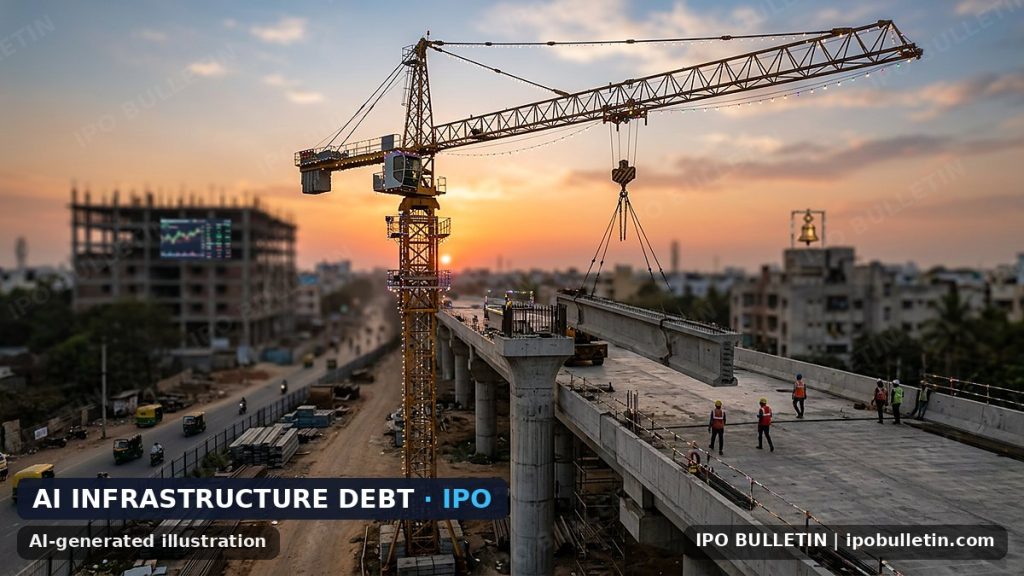
MUMBAI / NEW DELHI, OCTOBER 15, 2026 — During trading on Thursday, October 15, 2026, global financial markets reacted sharply as the cost of insuring against potential US technology defaults surged to record levels. According to market intelligence reports published by The Economic Times and Moneycontrol on October 15, 2026, mounting credit stress across data centres and capital-intensive artificial intelligence infrastructure has begun unnerving institutional investors worldwide.
Key Takeaways at a Glance
- Credit Stress Indicator: Credit default swap (CDS) pricing for US tech and AI infrastructure providers reached historical highs on October 15, 2026.
- Global Market Fallout: Asian indices experienced heavy selling pressure, with the KOSPI plunging nearly 8% and the Nikkei dropping 5% amid global rate and debt concerns.
- Sector Reallocation: Investors are shifting focus from high-beta artificial intelligence plays toward traditional tech firms and established Indian IT exporters listed on the Indian market indices dashboard.
Understanding Credit Default Swaps and AI Capital Expenditure
Credit default swaps (CDS) operate as financial insurance contracts allowing lenders to protect themselves against borrower defaults. On Wednesday, October 14, 2026, and extending into early trade on Thursday, October 15, 2026, derivative markets signaled acute anxiety over the massive debt loads accumulated by firms building generative AI data centres. Because these multi-billion-dollar facilities rely heavily on future monetization streams that remain unproven, bondholders and institutional lenders are demanding higher hedging costs.
Financial reporting compiled across Reuters and Bloomberg highlights that heavy capital expenditures (CapEx) funded through leveraged debt are testing the balance sheets of semiconductor manufacturers and cloud providers. As global interest rate expectations shift, the cost of servicing this floating-rate debt has climbed significantly, prompting a re-evaluation of growth valuations across international technology sectors.
| Market Event / Catalyst Milestone | Exact Calendar Date |
|---|---|
| US Tech Credit Default Swap Spike Recorded | October 15, 2026 |
| Asian Equities Sell-Off (KOSPI & Nikkei Drop) | October 15, 2026 |
| Indian IT Stocks Defensive Rally (Nifty IT Movement) | October 15, 2026 |
Global Spillover Effects and Asian Market Volatility
The credit squeeze in US technology debt triggered an immediate risk-off sentiment across Asian bourses on October 15, 2026. South Korea’s KOSPI crashed nearly 8% and Japan’s Nikkei 225 plunged 5% as foreign institutional investors pared exposure to high-valuation semiconductor and hardware manufacturers. Market analysts note that leveraged AI bets have created structural correlations between US credit markets and Asian manufacturing hubs.
Conversely, domestic Indian equities demonstrated resilience. While global tech shares reeled under debt concerns, the BSE Sensex surged 1,534 points and the Nifty 50 closed near 22,997 on October 15, 2026, buoyed by institutional buying in traditional IT service providers like TCS, Infosys, and HCLTech. Investors tracking primary market issuances can review the recent IPO listing performance tracker to gauge how domestic sentiment diverges from global debt trends.
Bull Versus Bear Perspectives on AI Debt Exposure
Market participants evaluating the current credit environment point to contrasting structural arguments:
- Bullish Catalysts: Proponents of AI infrastructure argue that massive capital expenditure is a necessary precursor to technological transformation. Early enterprise adoption, efficiency gains, and long-term cloud service contracts will eventually generate sufficient cash flows to amortize current debt levels.
- Bearish Risk Factors: Skeptics emphasize that rising credit default swap spreads indicate genuine counterparty risk. If enterprise software monetization stalls or interest rates remain elevated longer than anticipated, data center operators carrying high leverage could face severe debt restructuring pressures.
What to check before evaluating tech sector exposure
- Examine corporate balance sheets for net debt-to-equity ratios and interest coverage multiples.
- Review quarterly cash flow statements to distinguish between maintenance CapEx and speculative growth spending.
- Monitor credit default swap (CDS) index movements and corporate bond yield spreads for ongoing default risk signals.
- Assess geographic revenue diversification to protect portfolios against localized macroeconomic shocks.
Frequently Asked Questions
What are credit default swaps and why are they signaling stress in AI stocks?
Credit default swaps (CDS) act as financial insurance against corporate bond defaults. Surging CDS costs indicate that bondholders are increasingly worried about the debt loads and unproven revenue streams of companies financing massive artificial intelligence data centres.
How did global equity markets react to the US tech credit concerns?
On October 15, 2026, Asian markets experienced severe downward pressure, with South Korea’s KOSPI plunging nearly 8% and Japan’s Nikkei dropping 5%. Meanwhile, domestic Indian markets rallied, with the Sensex jumping 1,534 points as capital rotated toward traditional IT firms.
What structural risks do leveraged AI data centres face?
High capital expenditures funded through floating-rate debt make data centre operators vulnerable to elevated interest rates. If enterprise adoption of artificial intelligence tools fails to scale rapidly, debt servicing costs could pressure operating margins.
SEBI Compliance & Statutory Disclaimer
The information and analysis presented on IPO Bulletin (ipobulletin.com) are for informational and educational purposes only and do not constitute financial, investment, or legal advice. Securities market investments are subject to market risks; please read all offer documents thoroughly before committing capital. Grey Market Premium (GMP) figures are unofficial, unregulated street estimates. Always consult a SEBI-registered investment advisor before making financial decisions.
Sources referenced: The Economic Times, Moneycontrol, Livemint, Reuters, Bloomberg
Reusing this article or its images? Credit IPO Bulletin and link to https://ipobulletin.com/news/ai-infrastructure-debt-why-credit-default-swaps-reveal-growing-tech-stress/. Content licence.