
MUMBAI / NEW DELHI, SEPTEMBER 29, 2026 — During trading on Tuesday, September 29, 2026, GIFT Nifty slipped 76 points following a sharp 360-point Nifty rout in the preceding session, signaling a cautious opening for domestic benchmark indices Sensex and Nifty 50. According to market reports compiled by Moneycontrol and Livemint, rising geopolitical tensions involving the US and Iran have pushed crude oil prices above $106 per barrel, compounding pressures alongside elevated US Treasury yields and sustained foreign institutional investor (FII) capital outflows.
NIFTY 50
INDEX
▼ ₹197.80 (-0.87%)
Day Range: ₹22,569.65 – ₹22,753.20
52W Range: ₹22,182.55 – ₹26,373.20
● Real-Time Feed
Market Trigger & Macroeconomic Overview
The domestic equities landscape is grappling with multiple macroeconomic headwinds as the September 2026 derivatives expiry settles. Market analysts tracking global cues note that sustained FII selling combined with rebounding energy prices has altered the near-term risk-reward matrix for Indian equities. According to coverage from The Economic Times and Livemint, Asian peers including Kospi, Nikkei, and Taiwan indices have experienced mixed momentum, reflecting broader caution across emerging markets.
| Event / Macro Catalyst | Exact Calendar Date |
|---|---|
| Prior Session Nifty Rout (360-Point Correction) | September 28, 2026 |
| Crude Oil Rebound Above $106 / US-Iran Cues | September 28, 2026 |
| GIFT Nifty 76-Point Slip & Market Outlook Print | September 29, 2026 |
Key Macro Factors Weighing on Dalal Street
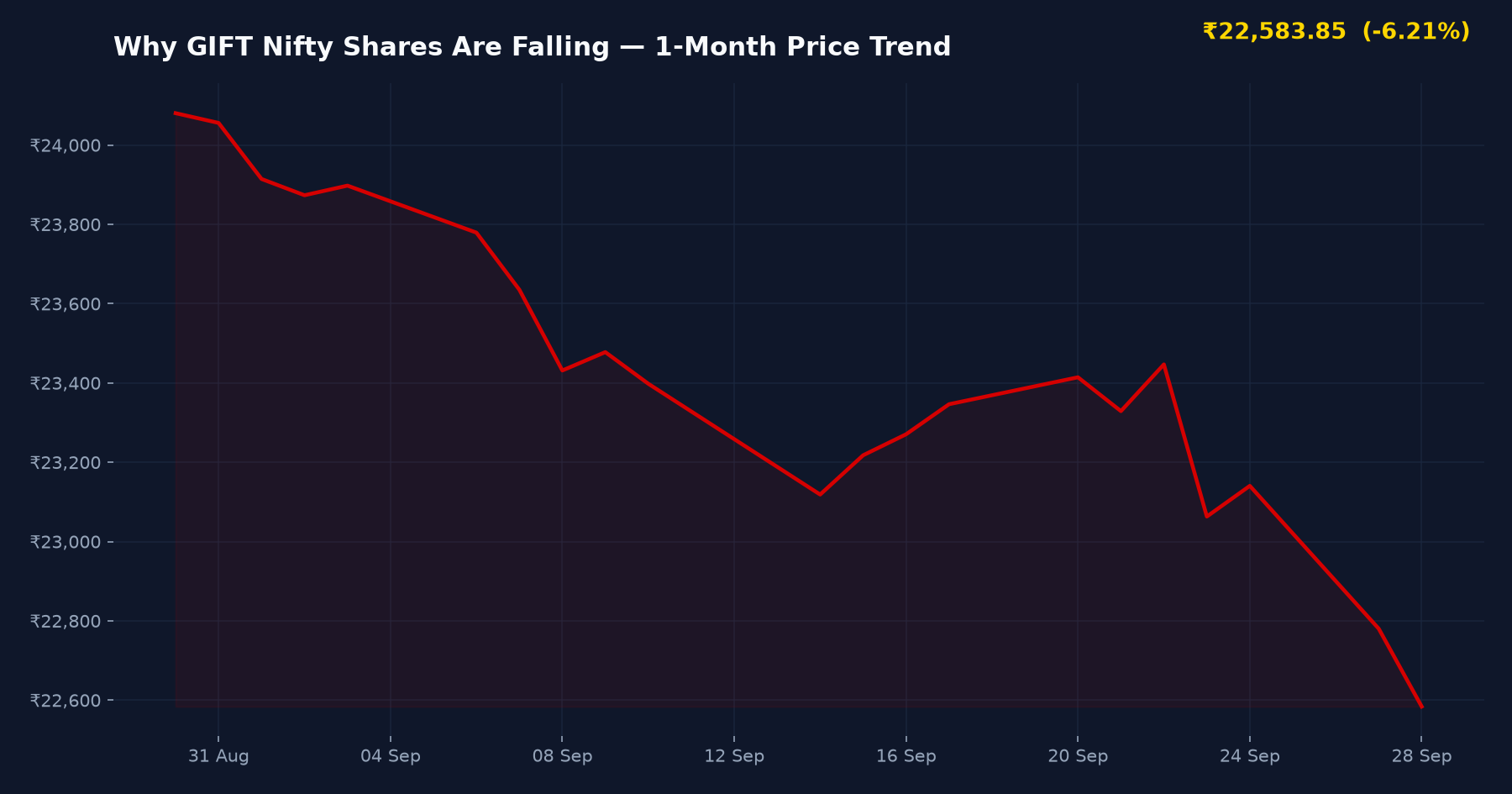
Financial intelligence gathered from major tracking desks highlights three primary vectors driving the current market caution:
- Crude Oil Volatility: Brent and WTI crude benchmarks pushing past $106 per barrel due to US-Iran supply concerns directly impact India’s current account deficit and inflation trajectory.
- FII Liquidity Outflows: Persistent net selling by foreign institutional investors continues to suppress large-cap index heavyweights across banking, IT, and energy sectors.
- US Yields Pressure: High US Treasury yields keep global liquidity tight, reducing risk appetite for emerging market equities like India.
Frequently Asked Questions
What factors are currently driving the weakness in GIFT Nifty and Indian indices?
GIFT Nifty has experienced downward pressure due to a combination of surging crude oil prices above $106 per barrel, persistent FII selling, high US bond yields, and regional geopolitical tensions impacting global market sentiment.
How do crude oil spikes impact the Indian stock market?
As India imports the vast majority of its crude requirements, rising oil prices inflate the import bill, widen the current account deficit, weaken the rupee, and increase input costs for manufacturing and chemical sectors, often resulting in margin compression.
Where can investors monitor real-time pre-market global cues?
Investors can track pre-market indicators through GIFT Nifty futures on NSE International Exchange, alongside Asian market indices such as Nikkei 225, Kospi, and Taiwan weighted indices reported via financial portals like Moneycontrol and Livemint.
SEBI Compliance & Statutory Disclaimer
The information and analysis presented on IPO Bulletin (ipobulletin.com) are for informational and educational purposes only and do not constitute financial, investment, or legal advice. Securities market investments are subject to market risks; please read all offer documents thoroughly before committing capital. Always consult a SEBI-registered investment advisor before making financial decisions.
Sources referenced: Moneycontrol, Livemint, The Economic Times, Newsdrum
Reusing this article or its images? Credit IPO Bulletin and link to https://ipobulletin.com/2026/09/why-gift-nifty-shares-are-falling-crude-surge-fii-selling-impact.html. Content licence.